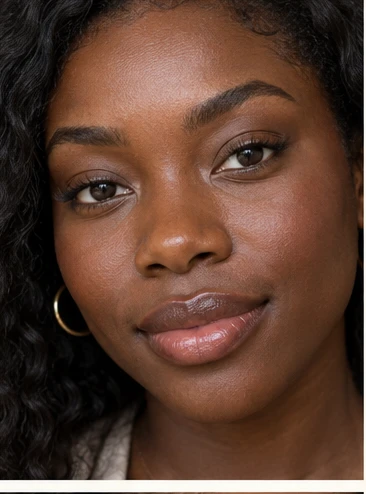
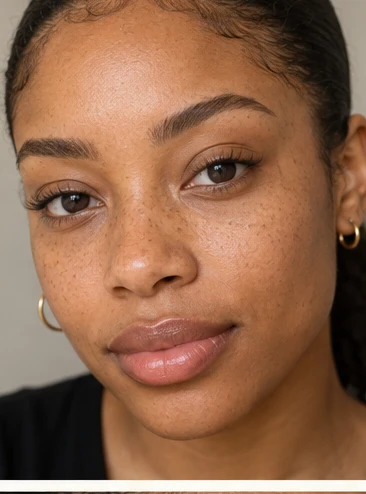
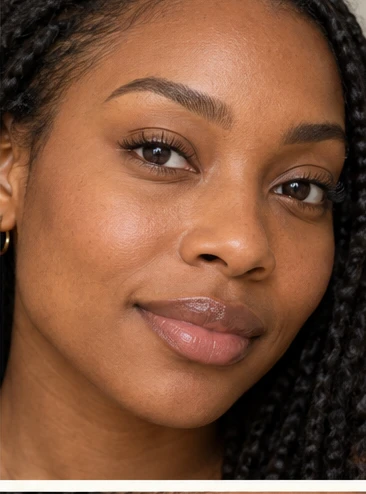
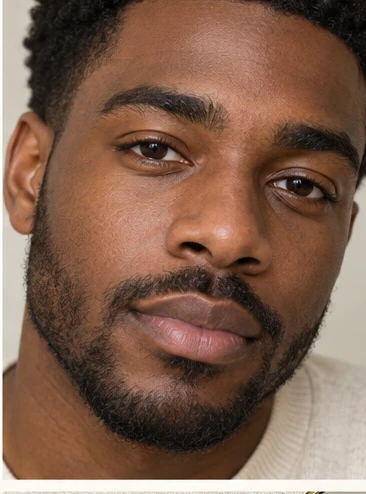
Individual hairs, natural skin, your own features. · AI-generated visual reference
Pick your next move
What do you want your brows to do?
Start with the smallest change that fits your goal. Grooming, makeup, chemical services and cosmetic tattoos do different jobs.
A starting point, not a prescription.
Choose your goal for a short route through the guide.
01 / Natural references
Notice the hair you already have.
Look at fullness, arch, tail and growth direction. These are reference looks—not rules based on gender or face shape.
Soft arch
A gradual rise and a soft turn toward the tail. Keep the transition natural.AI-generated visual reference.
Straighter brow
A flatter top line with a gentle tail. A straight brow can still have a small arch.AI-generated visual reference.
Rounded brow
A soft curve with less of a defined corner. Avoid removing hair just to create a sharper peak.AI-generated visual reference.
Full natural brow
Density and mixed hair directions can be part of the look. Tidying does not require thinning.AI-generated visual reference.
Words to point to
Front. Arch. Tail.
Front: the inner part near the bridge of the nose. A softer front often looks less block-like.
Arch: the highest part of your natural shape. It need not be sharply angled.
Tail: the outer end. Add temporary makeup here before deciding to remove more hair elsewhere.
Before you remove anything
Check from a normal distance.
Brush hairs into their usual direction, step back from the mirror and check both sides. A magnifying mirror can make one stray hair feel like the whole brow.
There is no need to force exact symmetry or follow a universal pencil-to-nose formula.
THE TREND EDIT / OCTOBER 2026
Find the look. Learn the difference.
Shape is the outline. Finish is how the hair is styled. Color and makeup can change the effect without changing the shape.
Current trend coverage includes straight, fluffy, thin, natural and lightened brows. The gallery also includes popular salon reference terms so you can describe the result you mean. These are options—not a ranking of what looks best.
AI-generated style reference.
SHAPE
Straight / Korean-inspired
A low, nearly horizontal arch with softly defined ends.
Try the idea: Try defining a straighter line with temporary brow makeup before removing hair.
How to try this look
Define the straighter line lightly with pencil.
Brush into your usual direction.
Use a few light strokes where you want a flatter-looking line.
Step back and soften with the spoolie.
Watch for: Flattening the arch by removing a large amount of hair.
AI-generated style reference.
SHAPE
Lifted straight / fox-inspired
A straighter body with an outer tail that angles slightly upward.
Try the idea: Show the tail direction you like. Ask how to keep your existing fullness.
How to try this look
Test the tail direction with temporary makeup.
Brush the body outward.
Use a light pencil stroke to explore a slightly lifted-looking tail.
Check the effect with your eyes relaxed.
Watch for: Shaving the natural tail just to copy a photo.
AI-generated style reference.
SHAPE
’90s / Y2K skinny
A visibly slim brow, worn softly arched or straighter.
Try the idea: Try a slimmer effect with grooming and makeup before deciding to thin the hair.
How to try this look
Explore a slimmer silhouette before changing the hair.
Brush existing hairs into a tidy line.
Ask an artist to demonstrate a temporary slimmer makeup effect.
Decide what fullness you want to preserve.
Watch for: Tweezing repeatedly to make the two sides identical.
AI-generated style reference.
SHAPE
Soft angled
A gently defined peak and tapered tail, with a softer front.
Try the idea: Point out the arch and tail; avoid treating a sharp outline as the only option.
How to try this look
Keep the front soft while defining the arch.
Brush through so you can see the natural peak.
Add light definition around that peak and the outer tail.
Blend the front rather than filling a solid block.
Watch for: Drawing a hard angle that does not follow the existing hair.
AI-generated style reference.
FINISH
Fluffy / feathered
Full texture with separate hairs brushed up at the front and outward through the body.
Try the idea: Try a small amount of brow gel while keeping visible texture.
How to try this look
Create texture with a small amount of brow gel.
Start with clean, dry brows.
Brush the front upward and the body outward with a little gel.
Let visible individual hairs remain.
Watch for: Using so much product that the hairs clump together.
AI-generated style reference.
FINISH
Sleek laminated-look
A deliberately aligned, swept-up finish with a tidier silhouette.
Try the idea: A styling-gel look is temporary. Chemical lamination is a separate salon service.
How to try this look
Try the styled finish before considering a chemical service.
Choose a brow styling gel intended for the eye area.
Brush gently upward and outward, following its directions.
Use the label’s removal method at the end of the day.
Watch for: Confusing a temporary styling product with chemical lamination.
AI-generated style reference.
COLOR EFFECT
Lightened / almost invisible
Pale hairs reduce contrast for a more editorial brow look.
Try the idea: Discuss a temporary eye-area makeup effect with an artist. No DIY bleach or hair dye.
How to try this look
Discuss a temporary color effect with a makeup artist.
Bring this reference and describe how pale you want the effect.
Ask which temporary eye-area product is suitable.
Follow the product’s application and removal directions.
Watch for: Applying scalp bleach or ordinary hair dye around the eyes.
AI-generated style reference.
MAKEUP FINISH
Soft ombré / powder-look
A diffused front with more definition through the body and tail.
Try the idea: Try the gradient with powder or pencil. This reference does not require a cosmetic tattoo.
How to try this look
Build a soft gradient with pencil or powder.
Begin with a little product through the body and tail.
Use what remains on the brush for a lighter front.
Blend until the front fades gently into the skin.
Watch for: Assuming the word powder means a tattoo is needed.
Compare two looks side by side
Notice thickness, arch, tail direction and hair texture. Different models and makeup mean these are style references, not a before-and-after result.
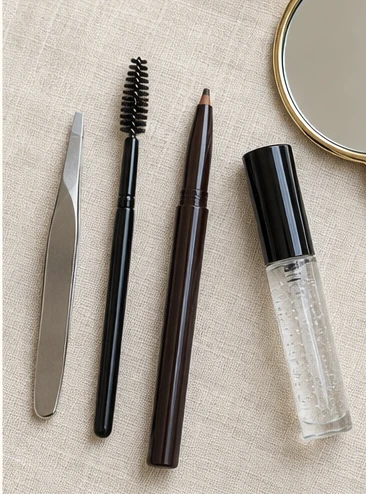
A spoolie and a regular mirror are enough to start. Choose good light and stop if skin becomes irritated.
Know the kit. Spoolie: brush. Pencil or powder: temporary color. Gel: hold. Tweezers: remove individual hairs. You do not need every tool.AI-generated visual reference.
Step 01
See your starting shape
Start with clean hands and clean brows. Brush the hairs gently into place with a clean spoolie. Decide what you want to preserve: thickness, arch and tail.
Small version: brush them and leave them alone. That is a complete grooming choice.
Step 02
Choose a boundary
If you are shaping at home, begin only with clearly separate stray hairs outside the main brow. If you cannot tell whether a hair belongs to the shape, leave it for a professional consultation.
Do not chase matching brows by repeatedly taking more from the thinner side.
Step 03
Tweeze sparingly, if wanted
Use clean tweezers, grip one visible stray near its base and pull gently in its growth direction. Pause and step back after a few hairs. Do not dig into skin or pull at a sore bump.
A first full reshape, tiny scissors near the eye or a facial razor can be easier to misjudge. Ask for a professional demonstration rather than rushing.
Step 04
Keep skin comfortable
Stop for bleeding, burning or a rash. Avoid piling active skincare onto irritated skin. Clean your tools, let them dry and do not share personal eye-area tools or cosmetics.
Sudden, patchy or unexplained brow loss is a reason to ask a clinician rather than keep changing the shape.
03 / Temporary styling
Try the look before committing.
Begin with very little product. You can always add another stroke.
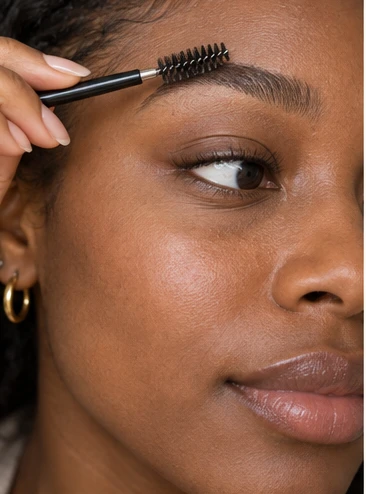
Brush into place
Gently brush the front upward and the body toward the tail. Follow your hair rather than forcing a severe angle.AI-generated visual reference.
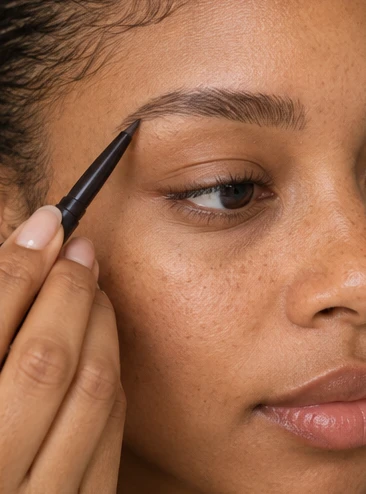
Fill the gap
Use light, short strokes where you want temporary definition. Start at the sparse area; keep the front soft.AI-generated visual reference.
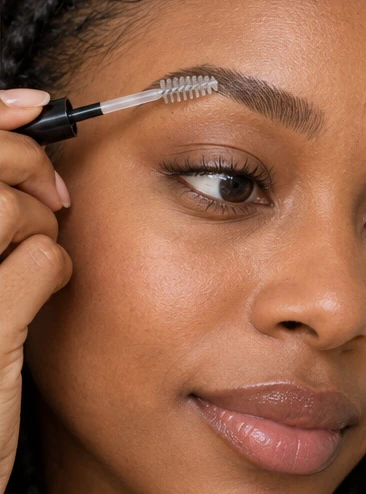
Set the direction
Use a small amount of brow gel labeled for the eye area. Brush through gently and follow its removal directions.AI-generated visual reference.
Product
Useful for
Common overstep
Fine pencil
Small gaps and a more defined tail.
Drawing a dark solid block across the whole brow.
Powder
A softer wash of color.
Loading the brush instead of building slowly.
Clear / tinted brow gel
Temporary hold; tinted formulas also add color.
Using too much or getting product into the eye.
Pomade / cream
More defined styling with a small angled brush.
Using more pigment than intended. Try a tiny amount first.
Compare colors in daylight against your natural brow and the finish you want. Brow gel is temporary makeup; it is different from chemical lamination. Remove eye cosmetics gently and follow the label. Never use scalp hair dye to color brows.
04 / Understand the salon menu
Shape, color, hold—or tattoo?
Ask for the exact service and product. Similar-sounding names can mean very different commitments.
Service
What changes
What to ask
Tweezing / tidy
Individual hairs are removed. A conservative cleanup can preserve your shape.
Can we keep the thickness and remove only the agreed strays?
Threading
Thread removes hairs to tidy or shape. It can still irritate skin.
Can you show me the shape before removing hair? How is hygiene handled?
Waxing
Wax removes hairs from a broader area. Sensitive or treated skin can be injured.
I use these skincare products / medications. Is waxing suitable, or should we choose another method?
Trim
Selected longer hairs are shortened. Trimming every upright hair can create gaps.
Will you brush and assess first, and preserve fullness?
Tint / dye service
Color is applied to brow hairs; some products also stain skin.
What exact product is permitted for this eye-area use? Who applies it, and what label precautions apply?
Lamination
Chemicals alter how brow hairs lie; it is different from styling gel.
What product and precautions do you use? Is my skin / hair suitable, and what is the aftercare?
Microblading
A cosmetic tattoo technique creates hair-like marks using pigment introduced into skin.
May I see healed work, hygiene practices, risks and the complete cost / touch-up policy?
Powder / ombré brows
Cosmetic tattoo shading creates a filled or gradient effect.
How will the healed result differ from the fresh result? What are the risks and removal limitations?
Combination brows
A cosmetic tattoo plan combines strokes with shading.
Which methods are included, and why do they suit my goals and skin?
05 / Before and after
Bring your preferences and your questions.
Choose a provider who explains the plan and listens when you say what you want to keep.
Before the appointment
Bring a reference and identify the specific part you like: fullness, arch, tail or finish.
List retinoids, acne medicines, recent skin treatments, allergies, previous reactions and cosmetic tattoos.
Tell the provider about irritated, broken or recently sunburned skin. Do not stop prescribed treatment without your prescriber’s advice.
Ask to approve the intended shape before removal or pigment. Confirm the full price and follow-up policy.
After the appointment
Follow written aftercare for the exact service. A wax, lamination and tattoo do not share one universal aftercare routine.
Do not pick, scrub or cover a painful reaction with more product.
Ask when to resume your usual skincare, cleansing and makeup.
Seek prompt medical advice for worsening pain, spreading redness, swelling or pus. Eye pain or vision changes need urgent eye care.
06 / Your appointment card
Say what you mean.
Generate a clear request here. Your entries stay in this tab and are not saved after reload.
My brow request
Keep my preferences visible.
AI-generated inspiration. Discuss suitability and what to preserve.
Reviewed against linked public guidance October 23, 2026. Images are AI-generated realistic references, not treatment results. Individual clinician review has not been completed. Service suitability, permitted products and provider requirements vary; confirm with the provider and relevant local regulator.