6 curly hair care tips
American Academy of Dermatology
Curly and coily hair cleansing, moisture and detangling; adapt to your scalp and product directions.
Open creator resource ↗
LEARNING ROOM / Finishing
Create a temporary pattern without adding hair or treating a wet set as an instant result.
01 / PREPARATION
As an Amazon Associate I earn from qualifying purchases.
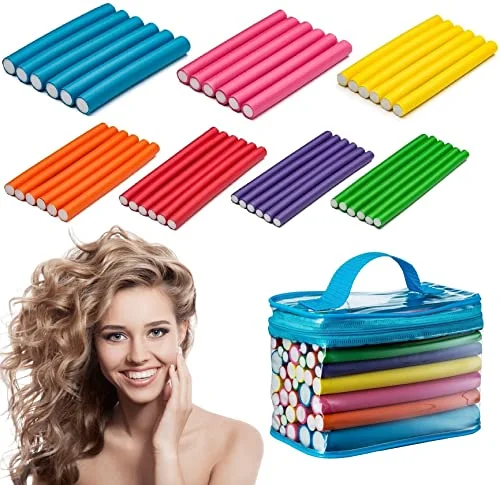
Choose a rod diameter that gives the curl size you want.
Shop on Amazon ↗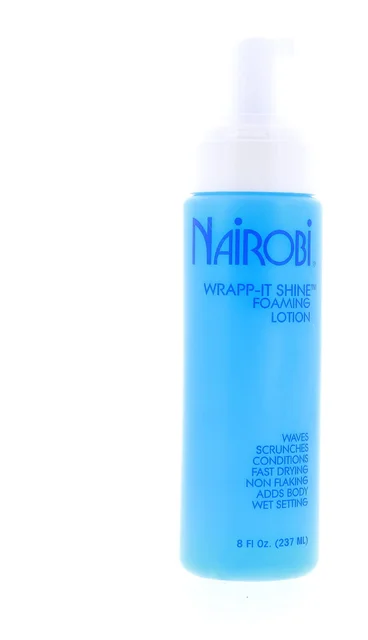
Smooth the finished style before wrapping.
Shop on Amazon ↗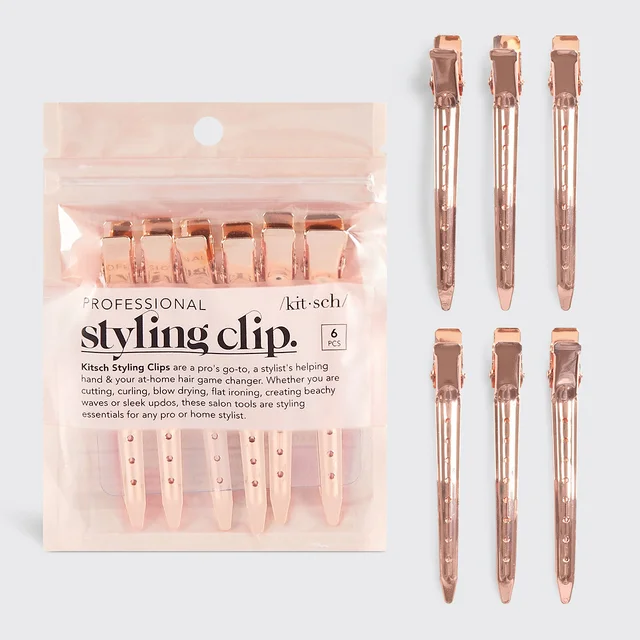
Keep neighboring sections out of the working area.
Shop on Amazon ↗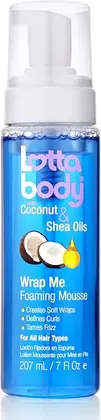
Smooth foam over a wrap or rod set before drying.
Shop on Amazon ↗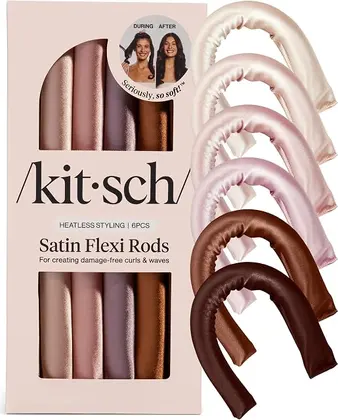
Wind sections around the soft rods for a heatless set.
Shop on Amazon ↗Choose the finished pattern first. A wash-and-go sets your existing curl pattern; braid-outs, twist-outs, knots and rollers temporarily reshape it.
02 / STEP BY STEP
Work with clean, detangled sections. Choose damp or dry setting according to your desired result and the styler directions.
For a braid-out, make comfortable three-strand braids. For a twist-out, use the two-strand lesson rather than treating them as the same pattern.
For a Bantu knot, twist the section into a small coil around its base and secure without pulling the scalp. Use a larger or looser section if it feels tight.
For rods or rollers, smooth the section around the tool and secure without crimping or straining the ends. A tool’s diameter changes the curl.
Wait until the set is completely dry before releasing. Unwind in reverse and separate gently rather than combing through for definition.
03 / TRY A SMALL SECTION
Test one braid, knot or roller in a reachable section and compare drying time and released shape.
Start with larger, easy-to-reach sections and schedule a drying window rather than rushing the release.
04 / AFTER THE TECHNIQUE
Preserve the finished shape loosely at night and refresh only the areas that need it.
Remove fasteners first, then unwind. Detangle with slip when returning to wash day.
05 / LEARN WITH THE CREATORS
American Academy of Dermatology
Curly and coily hair cleansing, moisture and detangling; adapt to your scalp and product directions.
Open creator resource ↗American Academy of Dermatology
Lower heat, less friction and gentler styling. Heat protectant does not make repeated heat harmless.
Open creator resource ↗