Choose the endpoint.
Shoulder, upper back, mid-back, natural waist or hip. Use your own body as the reference.

As an Amazon Associate I earn from qualifying purchases.
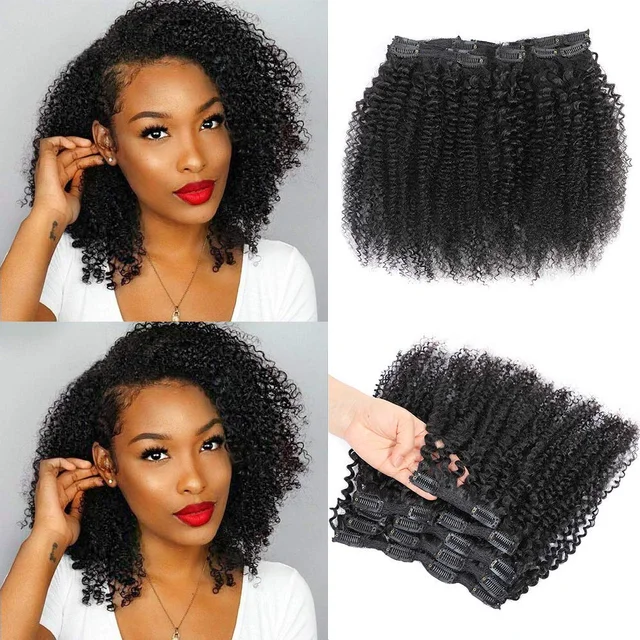
Compare clip placement and curl pattern before choosing a set.
Shop on Amazon ↗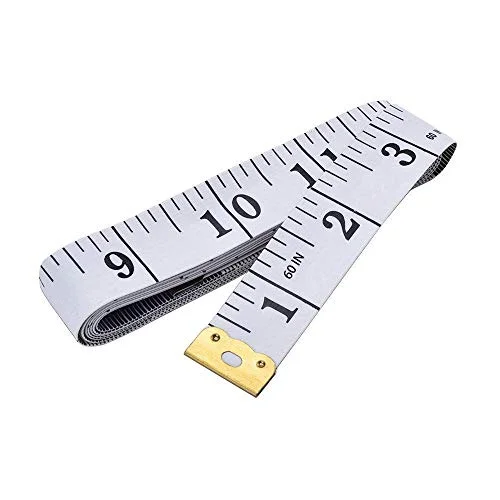
Measure the cap, track or desired length before choosing a size.
Shop on Amazon ↗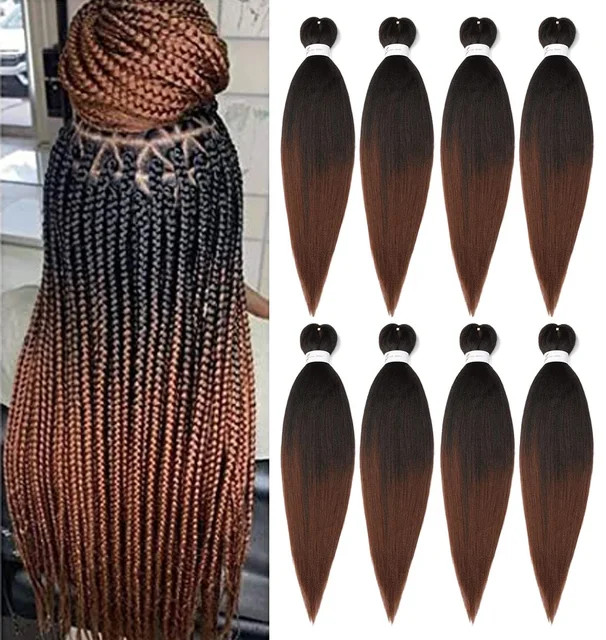
Compare fiber, length and color with your planned braid base.
Shop on Amazon ↗KNOW THE LOOK. KNOW WHAT TO BUY.
Choose an attachment, understand the material, and bring a clear plan to the right stylist.
YOUR GUIDE, ONE TOPIC AT A TIME
Maybe you want clip-ins for the weekend, a wig you can put on quickly, or braids that fit your budget. Start with the style you want and see what hair you need, how it goes in, and how to care for it.
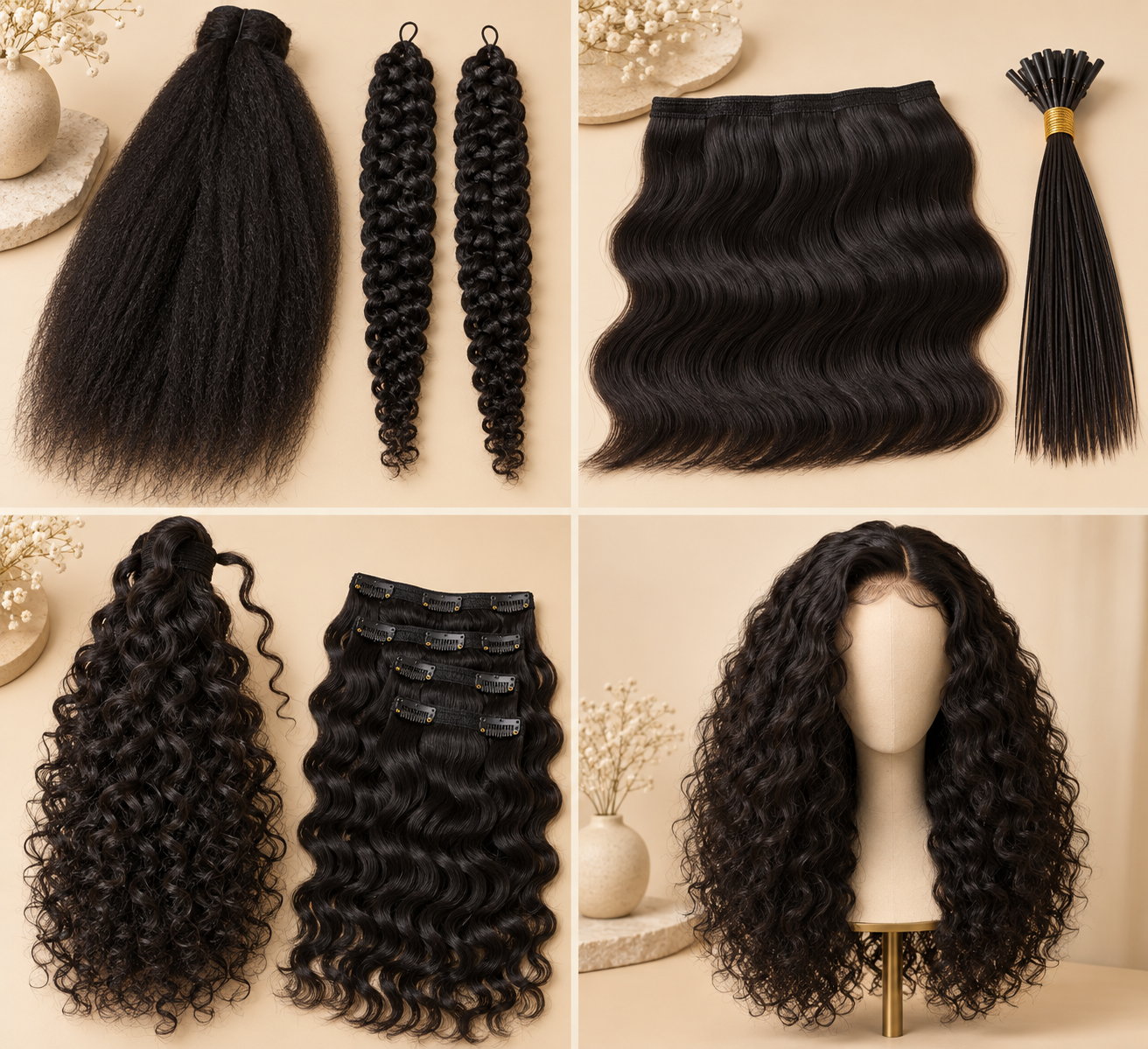
Compare how extensions go in, how long you want to wear them, and how they come out.
Bulk, French curl, twist hair, prepared crochet and locs.
Compare seams, tabs and individual strands—including wefts versus I-tips.
Explore removable length, volume and localized coverage.
Choose cap coverage, the part and whether to leave your own hair out.
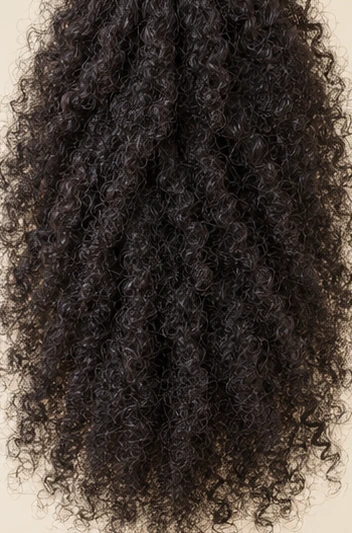
See how full the hair looks, how it falls, and whether the ends blend with yours.
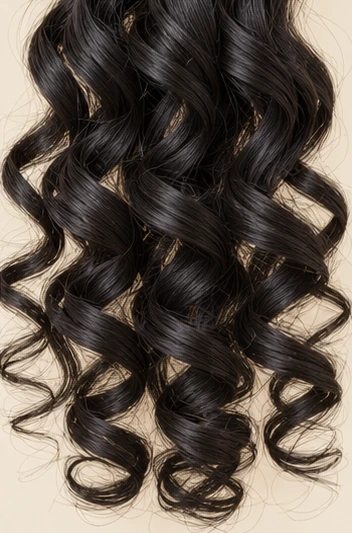
Understand Jerry, Bohemian, water wave and related product names.
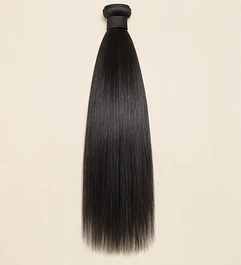
Choose an endpoint and read package inches for the selected format.
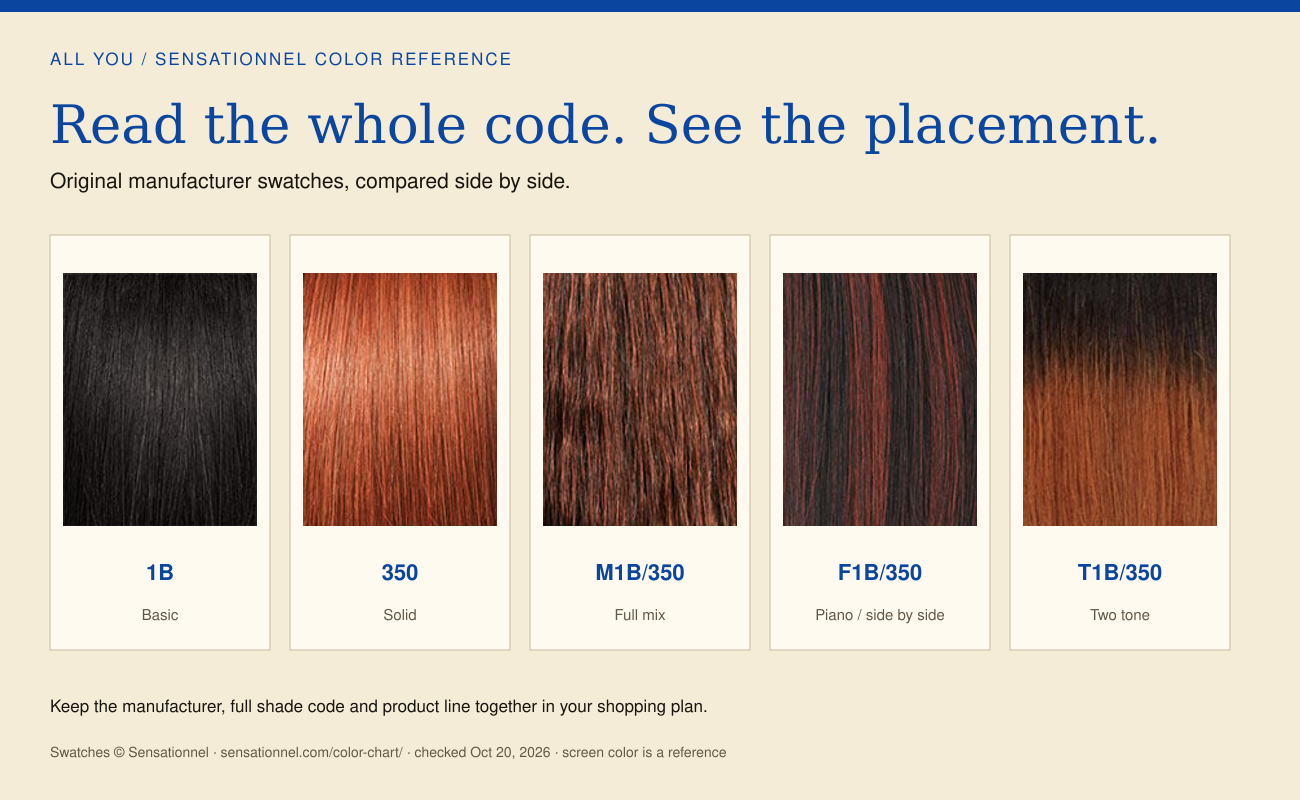
Compare manufacturer swatches, exact codes and root-to-end placement.
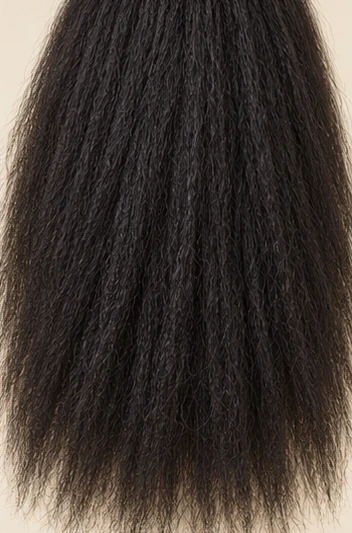
Match your own hair to the extension and test a routine you can maintain.
LENGTH / COMPARE BEFORE YOU BUY
Choose a texture to compare its bundles and its own body-length chart side by side.
Coily emphasizes small rounded coils; kinky emphasizes angular bends and zigzags. These are descriptive shopping terms that can overlap—not a diagnosis or a universal hair-typing system. Kinky-straight / yaki products are separate finishes from the natural kinky reference here.
8″–30″ / THE FULL LENGTH SELECTOR
Every whole-inch choice from 8″ through 30″ is available. Choose your package label below, then compare the realistic 12″ / 18″ / 24″ / 30″ references in the atlas. There is no invented photo for each inch.
Length is a labeled shopping choice. For curled versus stretched, folded versus unfolded, verify the package method. The photographic illustrations below are a separate 12″ / 18″ / 24″ / 30″ reference set, not photographs for every selector value.
Stretched-length reference options
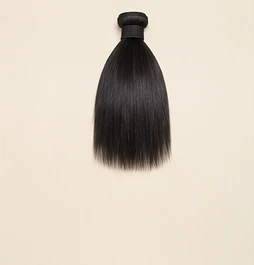
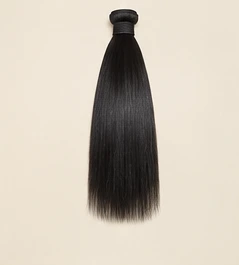
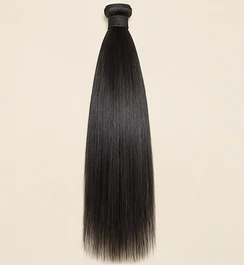
AI reference images, not photographed or inch-calibrated products. These labels identify illustrative shopping options; they do not verify a seller’s measurements.
Same view · four reference lengths
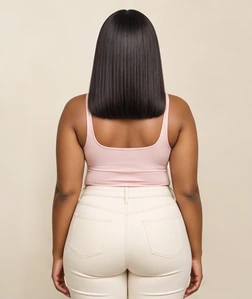
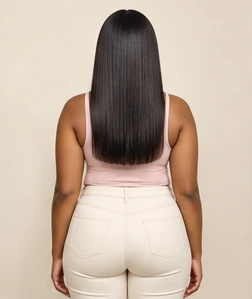
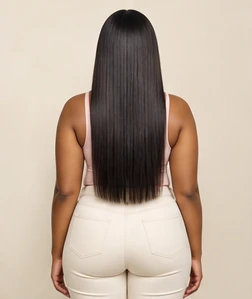
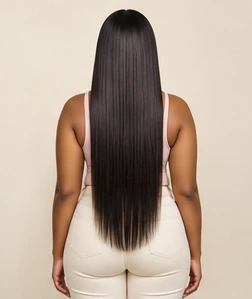
Shoulder, upper back, mid-back, natural waist or hip. Use your own body as the reference.
Is the package measured curled, stretched, folded or as the full unfolded strand? Do not halve an already-folded label.
Confirm the relaxed finish before buying all the hair. Keep the brand, product name and inches with your plan.
ALL YOU FIELD NOTES / LOOK CLOSER
Use the atlas to compare the direction of a look, then measure the route the hair will actually travel. A number becomes useful only when you know its starting point, measuring method and intended finished state.
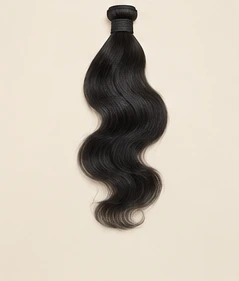
A crown attachment, a nape weft and a ponytail base start at different places. Write down the start as well as the endpoint.
A stated length may describe a straightened strand, a relaxed curl or an unfolded fiber. Ask the seller which one applies; do not infer it from the product title.
Braid take-up, curl spring, layers and a planned trim can change the visible drop. Request a sample in the finish you intend to wear.
Arithmetic example only: if a seller explicitly identifies a strand as 52″ unfolded end-to-end, folding it evenly produces about 26″ per side before installation. A product already described as 26″ folded should not be divided again. Neither calculation establishes a waist-length result.
Choose the situation closest to yours for a practical next step.
All You’s checklists, comparisons and worked examples are editorial applications of the sources below. Supplier descriptions apply to the named product or seller; they are not independent proof of performance. Examples with numbers are planning examples unless identified as product specifications.
An example listing separates material, braid type, style and length. Its preparation and setting claims apply to this item.
LOOK CLOSER / PRODUCT TEXTURE WORDS
Fine angular bends and compact, airy volume.
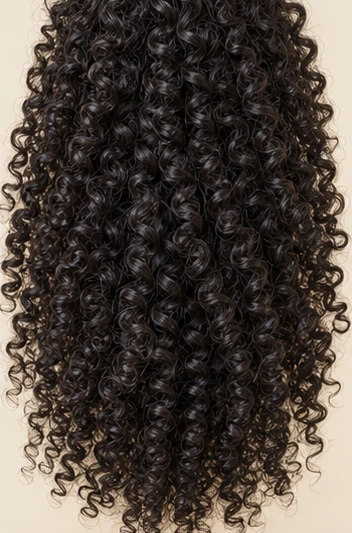
Small rounded springs and tightly repeating coils.
A textured, blown-out straight extension finish.
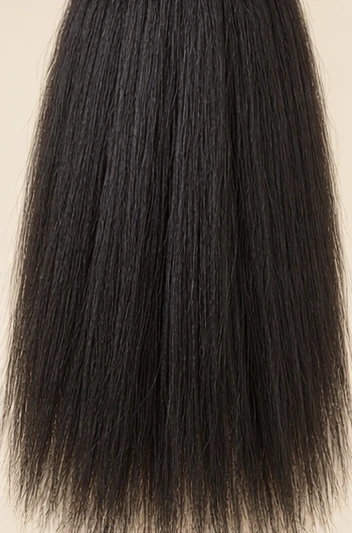
A smoother textured-straight finish with fine ridges.
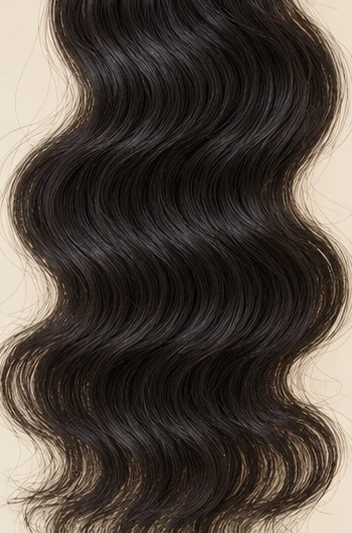
Broad, loose S-shaped bends.
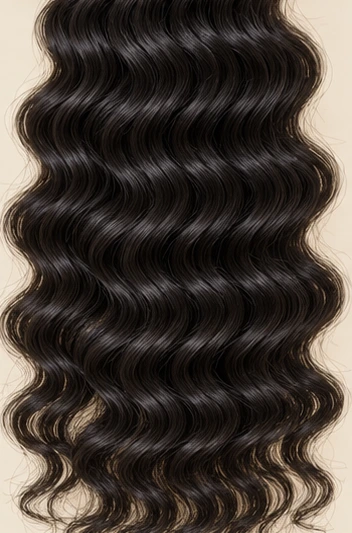
Deeper, more closely repeating wave ridges.
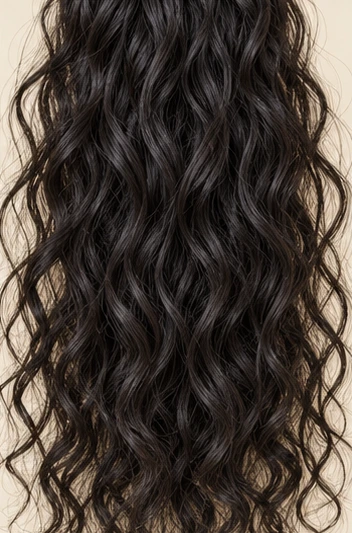
Looser, irregular waves and curls.
Large, open ringlets.
AI close-up references. Product names overlap and vary by brand; compare the exact product’s strand photo. These examples do not identify a person’s natural hair type. Kinky-straight and yaki are product finishes, not synonyms for kinky or coily natural patterns.
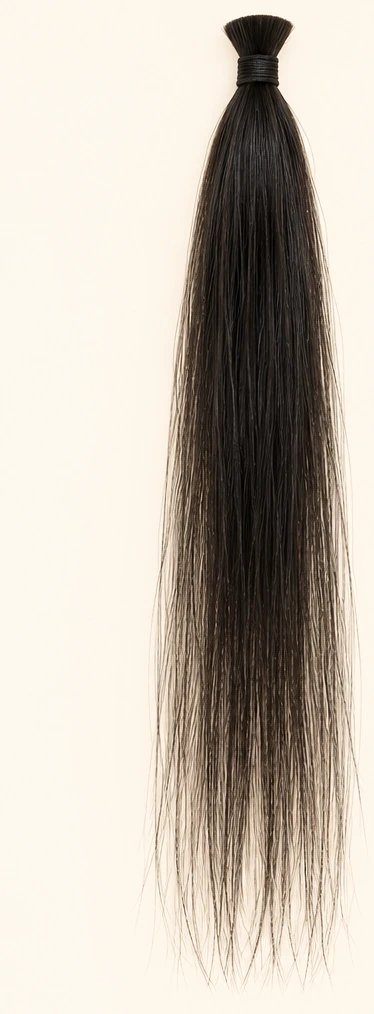
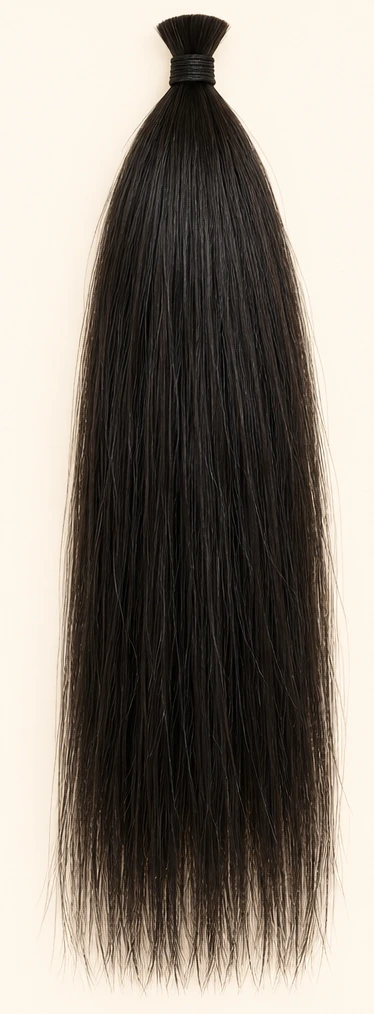
Two bundles can have the same labeled length and very different amounts of hair. Compare total grams, construction and the fullness you want.
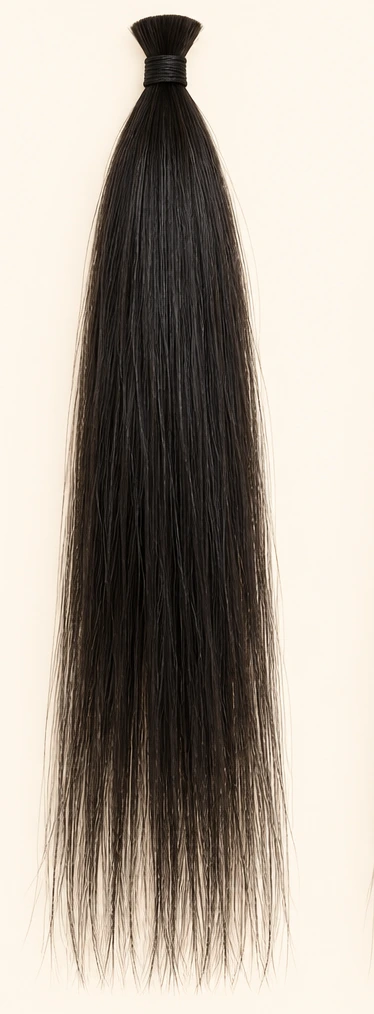
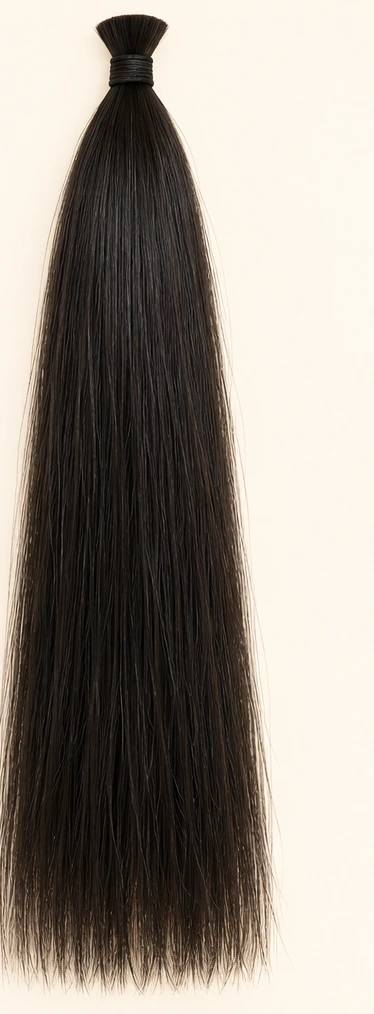
Look at how many strands reach the bottom, not only the longest strand. Ask for an end photo; seller terms such as “single drawn” or “double drawn” do not establish one universal fullness standard.
Illustrative fullness comparisons, not weighed samples or seller density percentages. Fuller does not automatically mean better; choose the amount and finish that suit your planned style.
ALL YOU FIELD NOTES / LOOK CLOSER
A texture close-up tells you about the shape of strands. A full-head image tells you about silhouette. Neither replaces a view of the ends or a package-weight comparison. Look at all three before deciding that one bundle is “better.”
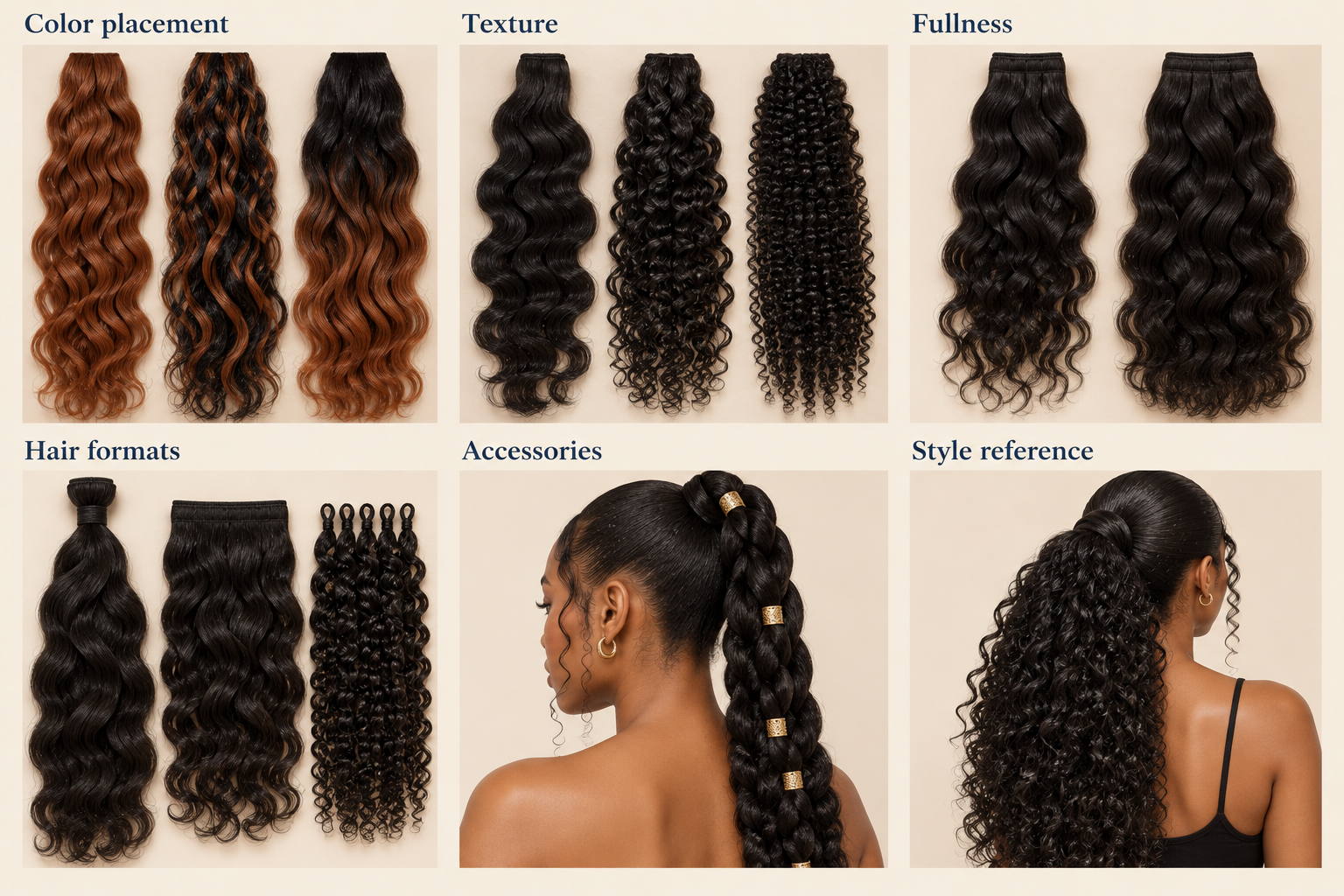
Describe S curves, open loops, small coils or angular bends. Several patterns may appear in one head or product.
Compare how much hair reaches the ends, not just the circumference at the top. Layering and strand-length sorting affect the outline.
Compare usable grams for the same length and format. A looped style, a loose bulk hank and a weft do not give interchangeable quantities.
Two packages can both contain 100 g and still have different-looking ends if their lengths or strand distribution differ. “Double drawn” is a sorting description to clarify with the seller, not a reason to skip end photos or a sample.
Choose the situation closest to yours for a practical next step.
All You’s checklists, comparisons and worked examples are editorial applications of the sources below. Supplier descriptions apply to the named product or seller; they are not independent proof of performance. Examples with numbers are planning examples unless identified as product specifications.
One supplier’s explanations of geographic labels and construction. It is a commercial source, not independent certification.
Pulling styles can harm the hairline; pain or irritation calls for changing or removing the style.
SHOPPING LANGUAGE / LOOK BEYOND THE LABEL
Keep origin, material, texture and construction as separate questions. Country-style names can be marketing labels; sourcing needs its own evidence.
A widely used extension collection name. Compare the actual strand thickness, luster, wave and processing; the name does not establish donor origin.
Often presented as a smooth or lustrous product line. Inspect the finish and ask for sourcing details rather than assuming a Malaysian donor.
Another geographic product label. Compare density by grams and ends, not a promise that the country name makes the hair lighter or fuller.
Can be a sourcing statement when the seller documents it. Ask about collection, sorting, processing and whether the supplied texture is natural or set.
Ask the seller to distinguish documented sourcing from a collection name and to describe the strand size and processing of the exact lot.
Check the supplier’s traceability and processing disclosures. Nationality alone does not guarantee a curl pattern, quality level or wear time.
THE HAIR-GRADE DECODER
10A is the seller’s grade claim. It does not tell you a universally agreed human-hair percentage, cuticle condition, lifespan, dye result or number of donors. One seller’s grade cannot reliably rank another’s.
Get written details on material, processing, cuticle alignment, full-length strands, weight and returns. Compare two exact products using those details.
Compare washed texture, ends, shedding and tangling with your stylist. No test of appearance alone proves sourcing or a virgin/raw claim.
SL Raw: sourcing, raw/virgin language and seller grades ↗
Indique: questions about origin labels and processing ↗
These are suppliers’ explanations, not an independent certification program. Ask the seller of your specific hair for evidence.
ALL YOU FIELD NOTES / LOOK CLOSER
Separate where a supplier says the hair came from, where it was processed, its texture, and how it was constructed. Those answers may be different. Treat Brazilian, Malaysian and similar labels as claims to clarify rather than shortcuts for how every bundle will behave.
Ask what documentation supports donor origin and collection practices. A country-style collection name is not the same as documented sourcing.
Ask about color, steam texturing, coatings and other treatments. Remy, raw and virgin answer different questions and are used differently by suppliers.
Ask for the seller’s written meaning of an A grade. Compare observable specifications and policy terms rather than ranking unrelated sellers by the number of A’s.
“12A Brazilian body wave” leaves material, lot weight, processing, cuticle condition and the grade definition unresolved. A more useful comparison lists those fields for two exact SKUs. An attractive sample still cannot prove where donors lived.
Choose the situation closest to yours for a practical next step.
All You’s checklists, comparisons and worked examples are editorial applications of the sources below. Supplier descriptions apply to the named product or seller; they are not independent proof of performance. Examples with numbers are planning examples unless identified as product specifications.
One supplier’s explanations of geographic labels and construction. It is a commercial source, not independent certification.
The supplier’s processing and sourcing terminology. Compare the exact seller’s written specification rather than assuming shared definitions.
THE CURL-NAME DICTIONARY
Jerry / Jheri / Jerri, Bohemian, deep curl and water wave are product-search terms. They do not form one standardized curl-size scale. A natural-hair type chart and an extension texture name describe different things.
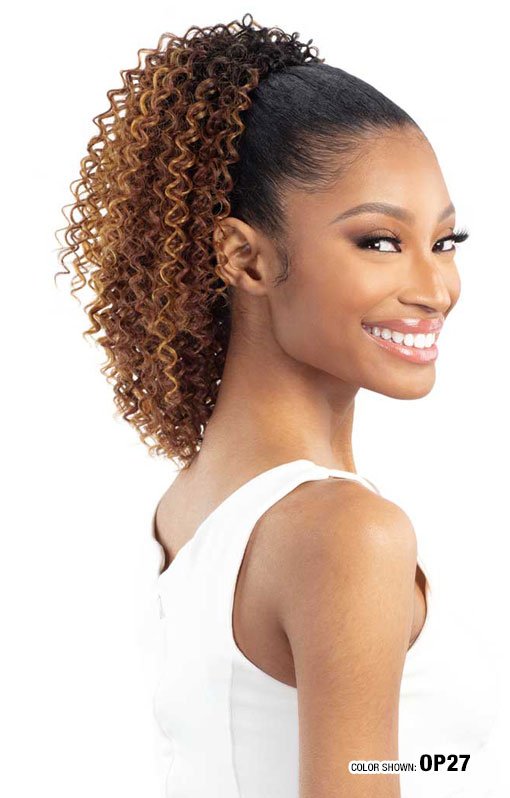
Often used for a defined, springy curly finish. The spellings overlap in shopping searches; do not assume identical ringlet size or fullness.
QUE product example ↗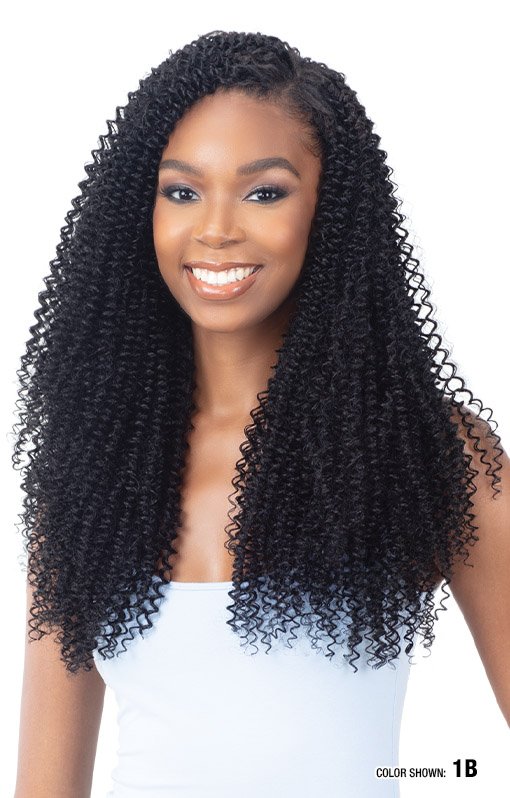
This Organique example is marketed as tight curly. “Bohemian” is not always a loose beach wave, and it does not automatically mean boho braids.
Organique product example ↗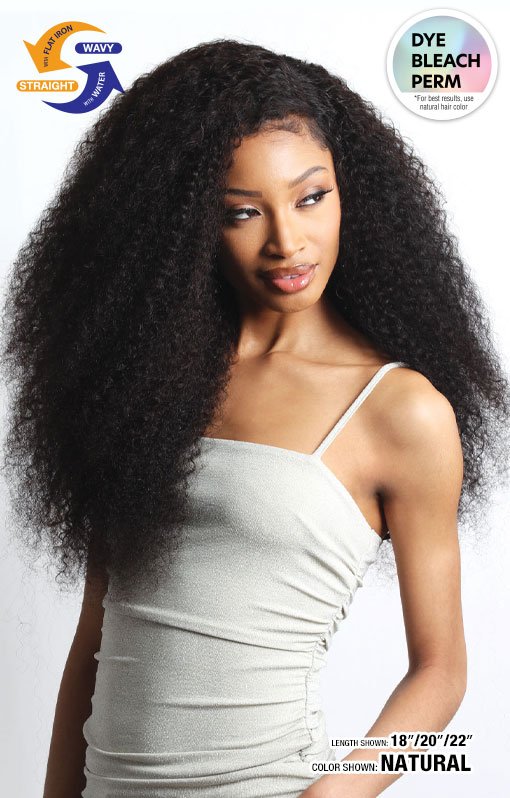
Glossy also uses “Bohemian Curl.” Compare the actual curl, material, wet/dry behavior and care rather than swapping products by name alone.
Glossy product example ↗Original manufacturer images from Shake-N-Go. Examples identify these products, not every product with the same texture name.
Broad repeating S curves; compare how defined the wave remains after washing.
A deeper, more closely repeating wave than a loose body-wave reference.
Often sold as a looser, more irregular wave/curl mix; compare the specific listing.
Larger, more open loops or ringlets.
Small coils, angular bends or a mix. Compare relaxed and stretched samples.
ALL YOU FIELD NOTES / LOOK CLOSER
Use the dictionary as a starting vocabulary. A natural curl-type label, an extension collection name and a finished hairstyle name can refer to different things. Bring a close-up so the stylist can see what the word means to you.
Look for an S bend, a complete loop, a small coil or an angular change. Compare the spacing and consistency across the strand.
A styled listing, washed sample and wet strand may show different shapes. Ask which state the photograph represents.
Some products stay smoother through most of the length with curls concentrated at the ends. Others repeat a pattern throughout.
Shake-N-Go describes Organique Bohemian Curl 30″ as a tight-curly product. Its Glossy collection also uses Bohemian Curl with a different specification. “Bohemian” therefore needs the collection and product context, not an assumed beach-wave shape.
Choose the situation closest to yours for a practical next step.
All You’s checklists, comparisons and worked examples are editorial applications of the sources below. Supplier descriptions apply to the named product or seller; they are not independent proof of performance. Examples with numbers are planning examples unless identified as product specifications.
This particular Bohemian product is described as tight curly and offered for several installations.
Another collection uses Bohemian in its name with its own material and wet/dry styling description.
LEAVE-OUT BLENDING / YOUR HAIR + THE EXTENSIONS
Leave-out is your own hair kept outside the foundation to cover an attachment or complete a natural part. The goal is a comfortable blend you can maintain between appointments. Match the actual exposed area—your crown, hairline and nape may behave differently.
AI texture references, not before-and-after blending results or verified product matches.
All You’s sample-test sequence is an editorial consultation aid, not a diagnosis or a guaranteed technique. General care basis: AAD Black hair care ↗ · AAD traction guidance ↗. Construction basis: Outre manufacturer FAQ ↗.
ALL YOU FIELD NOTES / LOOK CLOSER
Leave-out blending means bringing your exposed natural hair and the added hair into a compatible finish. Begin with the hair you actually plan to leave out, in its dry wearing state, and choose a sample that does not demand a routine you cannot maintain.
Compare the curl or stretched shape and how it changes with normal activity, humidity and washing. A matching product name is not enough.
Check whether your natural section can conceal the attachment from the side and back. A heavy extension silhouette may overwhelm a lighter leave-out area.
Compare roots, undertone, midlengths, ends and surface shine in indirect daylight. More product is not a reliable correction for a material or texture mismatch.
For a blowout-style half wig, compare a sample against your own stretched front section, then check the front edge while turning your head and changing the part. If the sample is much silkier or shinier, try a more textured option before planning repeated pressing to hide the difference. This is a consultation example, not a guaranteed match.
Choose the situation closest to yours for a practical next step.
All You’s checklists, comparisons and worked examples are editorial applications of the sources below. Supplier descriptions apply to the named product or seller; they are not independent proof of performance. Examples with numbers are planning examples unless identified as product specifications.
General care and styling precautions for natural hair; not extension-fiber instructions.
General advice to reduce damage from styling; a synthetic product’s permitted temperature still needs its own instructions.
Pulling styles can harm the hairline; pain or irritation calls for changing or removing the style.
ALL YOU / CHOOSE YOUR EXTENSION / CHECKED October 21, 2026
Choose an extension family, compare the construction, then match the material and finish to your own hair. Start here when a product name or style photo leaves the shopping list unclear.
Loose bulk, French curl, twist hair, crochet pieces and locs.
Compare sewn seams, tape tabs, I-tips, micro-rings and fusion bonds.
Clip-ins, halos, ponytails, puffs, buns, bangs and toppers.
Half, headband, U/V-part, full-cap, lace and separate coverage pieces.
Open a guide for its construction, coverage, buying checks and next steps.
21 of 21 format guides
 AI VISUAL REFERENCE
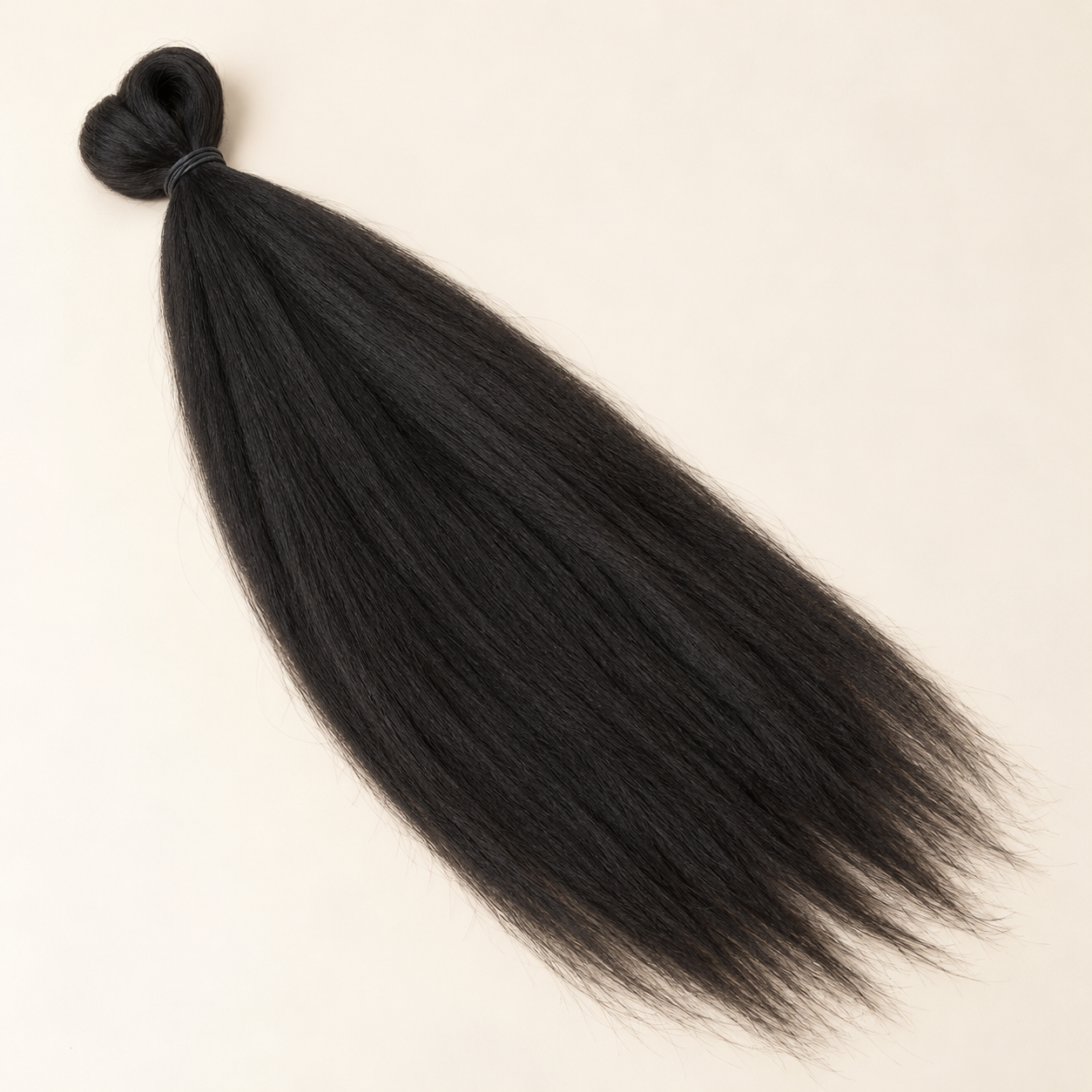
Loose braiding bulk. Illustrative format appearance; verify the exact product construction with its manufacturer. AI-generated reference, not a product photograph or installation demonstration.
Loose hair without a sewn seam. Regular, jumbo and pre-stretched describe preparation or size, not material.
Usually integrated into a braid or twist rather than used to cover a track.
Confirm usable grams or piece count, dimensions and exactly what one retail package includes.
Is this braid-base hair, loose decorative curl hair, or both? Confirm grams and folded measurement.
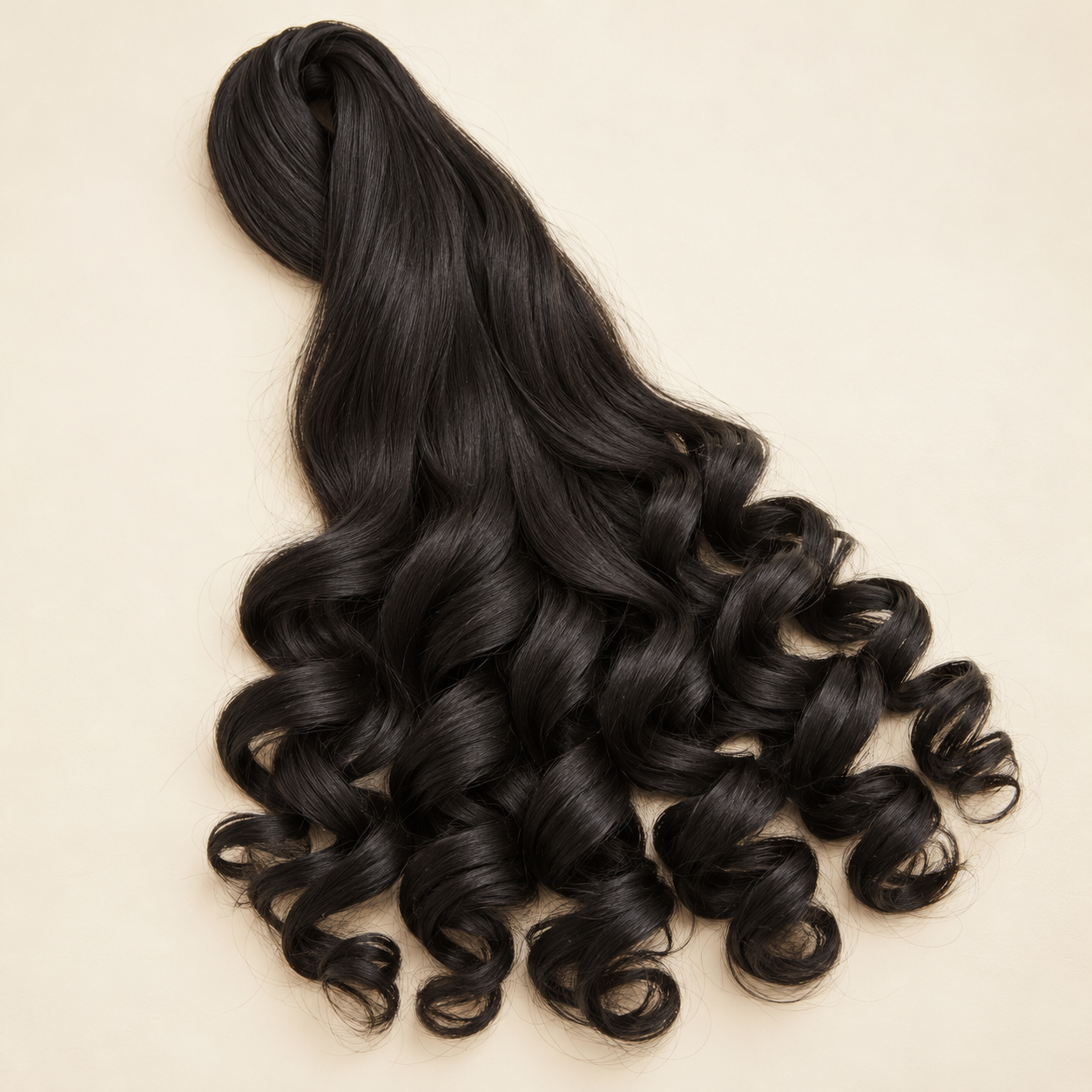 AI VISUAL REFERENCE
French curl lengths & ends. Smooth lengths and curled ends are a finish reference; compare the actual curl product. AI-generated reference, not a product photograph or installation demonstration.
Loose curls can decorate braids; French curl usually describes a smooth length ending in curls. Similar names can hide different construction.
Loose accent curls are added hair, not your natural leave-out.
Confirm usable grams or piece count, dimensions and exactly what one retail package includes.
Where do curls begin, what is the material, and is it bulk or looped?
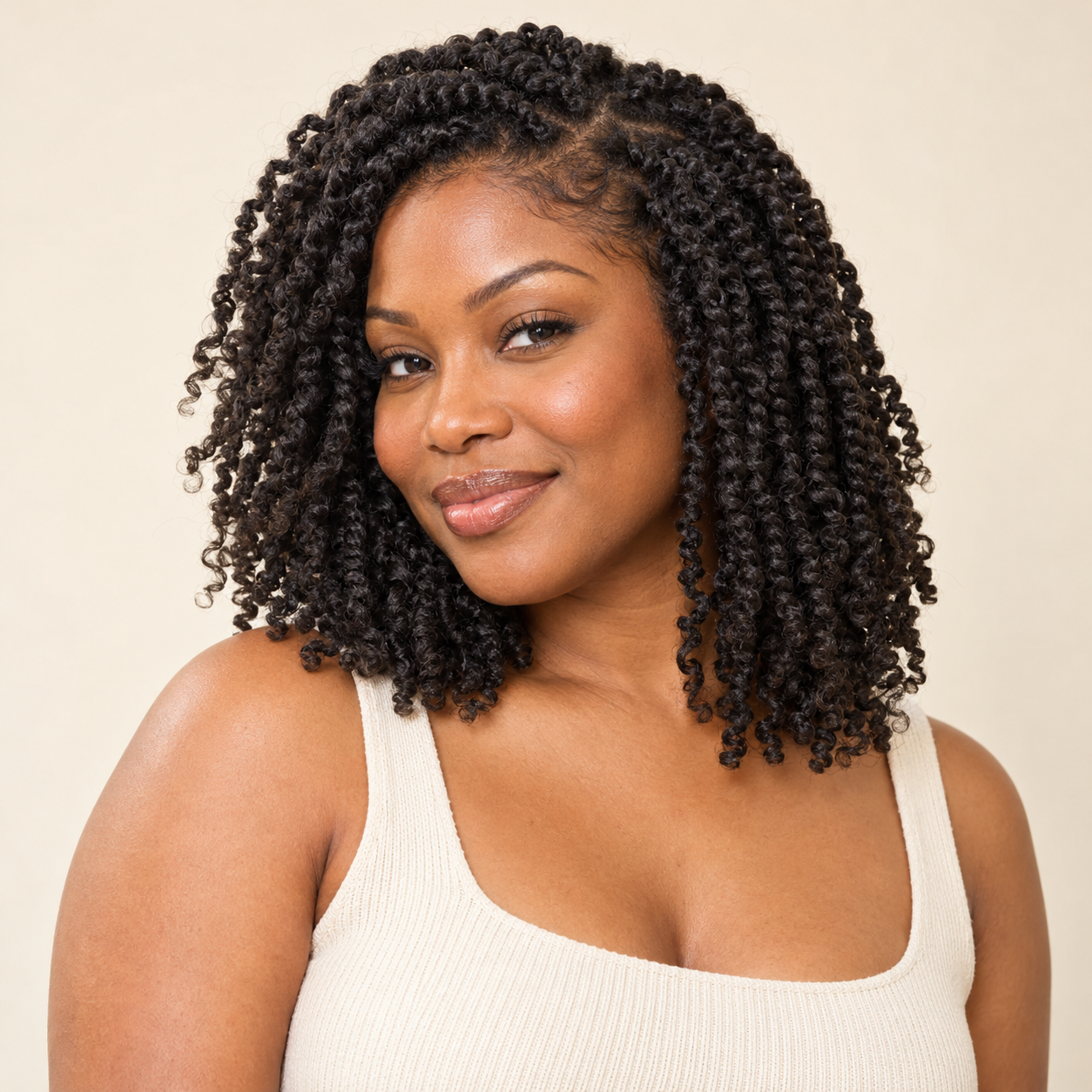 AI VISUAL REFERENCE / 3 VIEWS
Spring-twist finished look. Finished-style inspiration. This portrait does not establish the attachment method or fiber. AI-generated reference, not a product photograph or installation demonstration.
Texture and style families used for twists or wrapping. Compare spring-twist and passion-twist finishes separately from loose Marley-style fiber or a ready-made twist.
Choose the attachment first, then the finished twist shape.
Confirm usable grams or piece count, dimensions and exactly what one retail package includes.
Loose wrapping fiber or finished pieces? Can the supplied curl be separated?
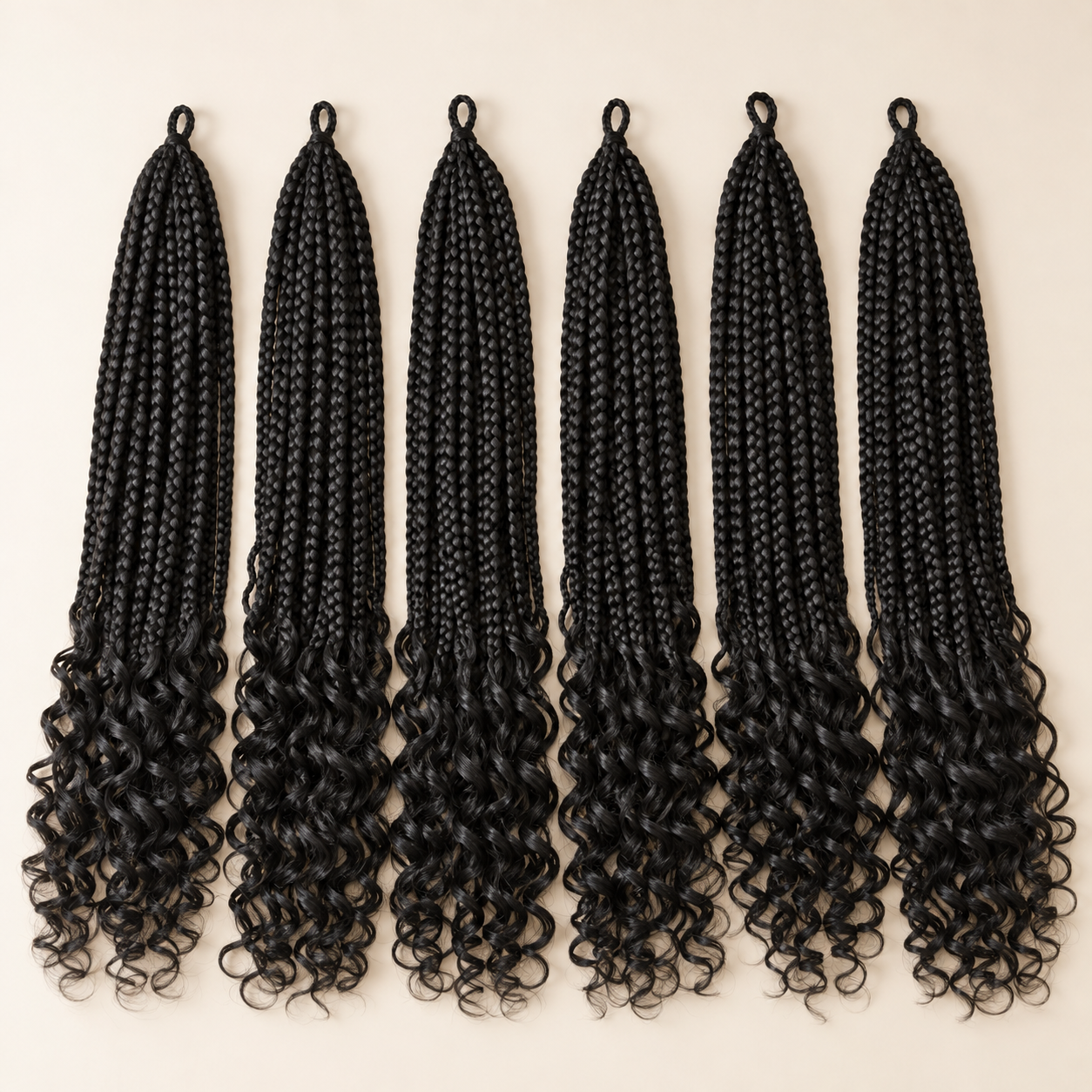 AI VISUAL REFERENCE
Prepared crochet braid pieces. Illustrative format appearance; verify the exact product construction with its manufacturer. AI-generated reference, not a product photograph or installation demonstration.
Prepared attachment pieces may be loose curls, braids, twists or faux locs. Folded and looped products are not necessarily installed identically.
A coverage plan may avoid loose natural hair, but perimeter finishing varies.
Confirm usable grams or piece count, dimensions and exactly what one retail package includes.
What does one strand/string contain, and how is this exact piece secured?
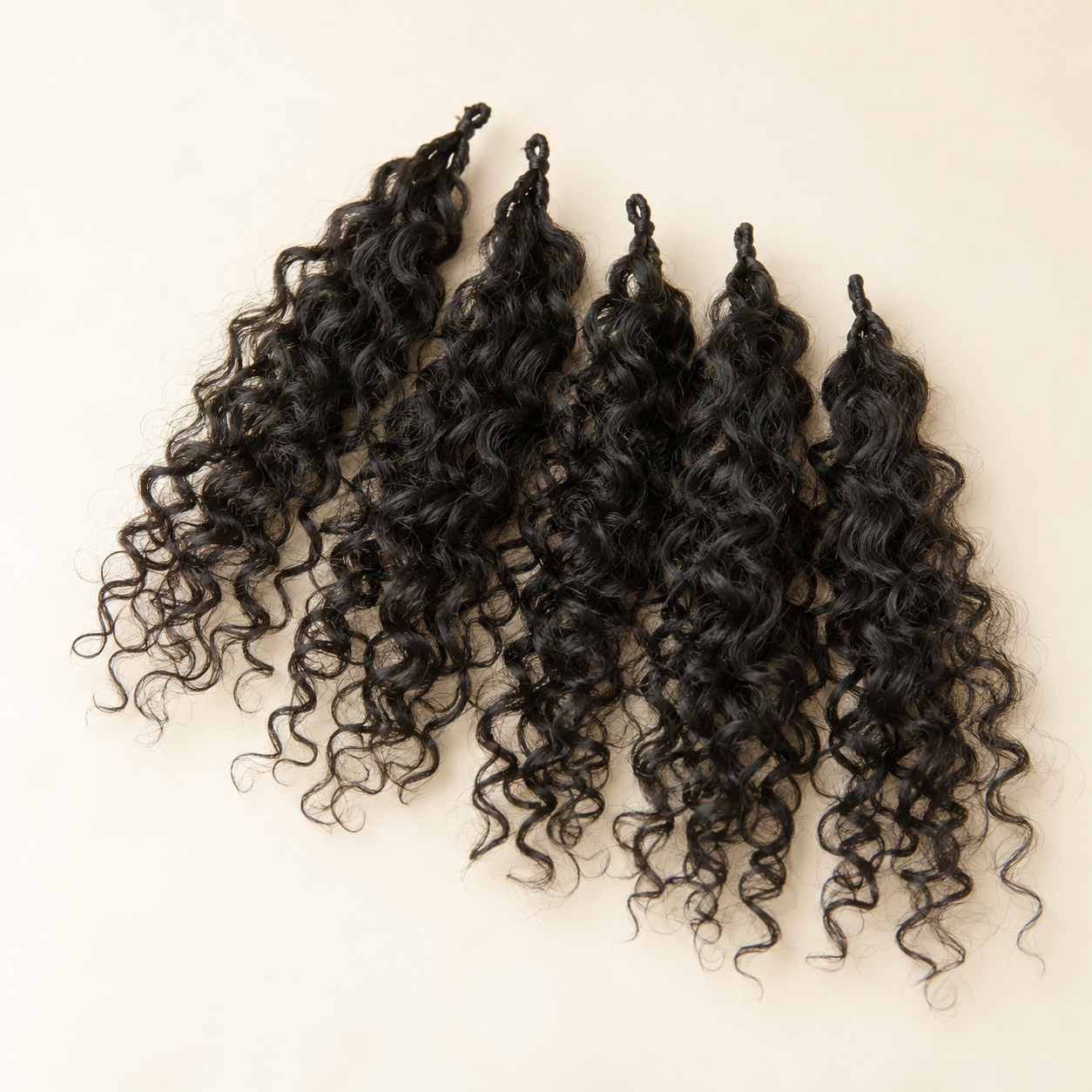 AI VISUAL REFERENCE
Fine curly crochet pieces. An appearance reference only; attachment ends differ between products. AI-generated reference, not a product photograph or installation demonstration.
Retail vocabulary for fine crochet-style curls or attachment pieces; it is not a fiber specification.
Discuss foundation visibility and the intended part before ordering.
Confirm usable grams or piece count, dimensions and exactly what one retail package includes.
Check loop or knot construction, pieces per string, and real installed examples.
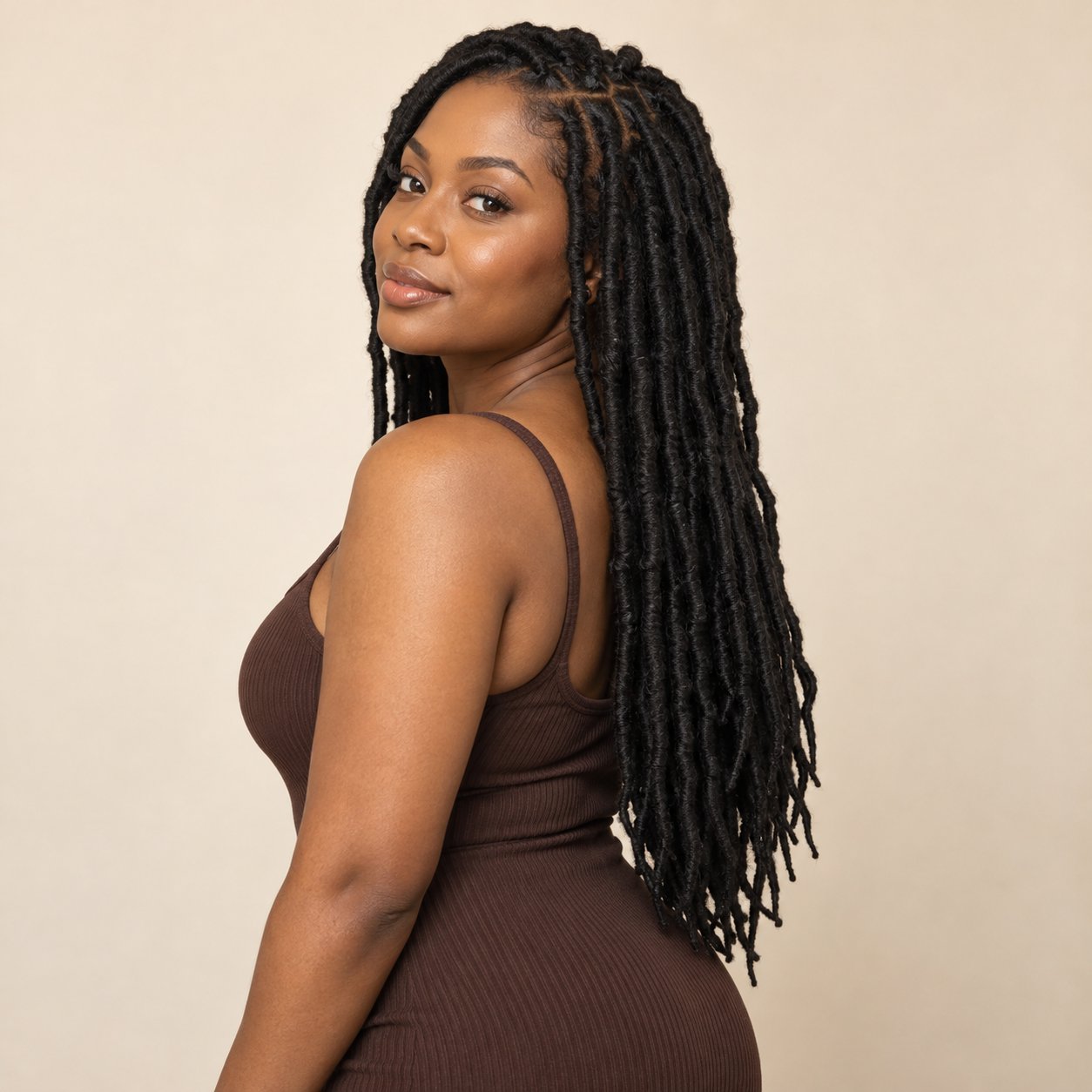 AI VISUAL REFERENCE
Soft faux-loc finished look. Finished-style inspiration; wrapped, crochet and existing-loc joins need different plans. AI-generated reference, not a product photograph or installation demonstration.
Ready-made faux locs, wrapping hair and extensions intended to join existing locs are different purchases.
Focus on the join and foundation rather than a loose-hair blend.
Confirm usable grams or piece count, dimensions and exactly what one retail package includes.
Crochet, wrap or permanent loc extension? Confirm material, weight and removal.
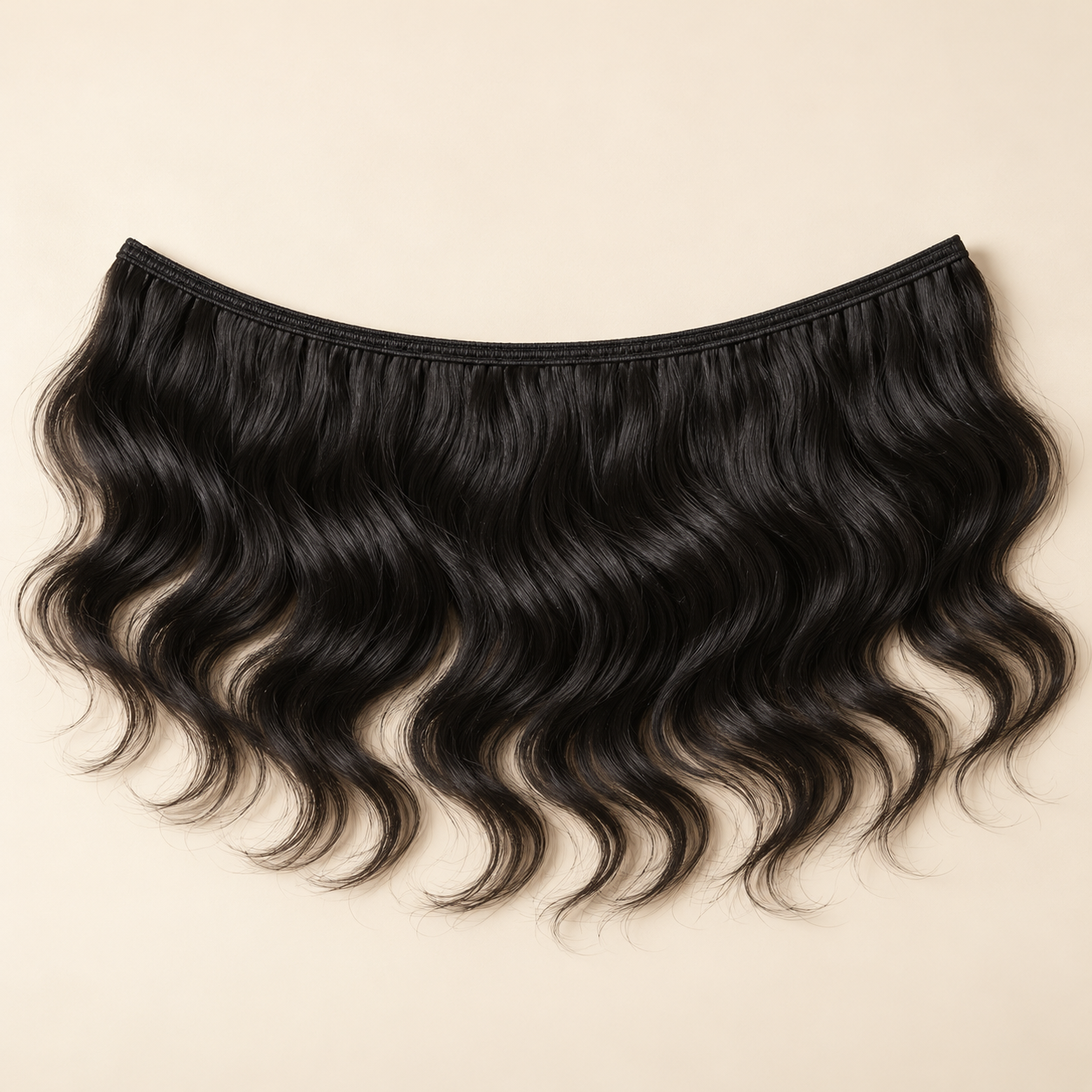 AI VISUAL REFERENCE
Continuous weft seam. Illustrative format appearance; verify the exact product construction with its manufacturer. AI-generated reference, not a product photograph or installation demonstration.
Hair attached along a seam. Seam construction affects cutting, folding and the stylist’s attachment method.
Traditional leave-out installs need coverage above the top track; closure installs use a different plan.
Compare usable grams, seam width and whether this exact seam may be cut.
May this weft be cut? What foundation, coverage and removal does the stylist propose?
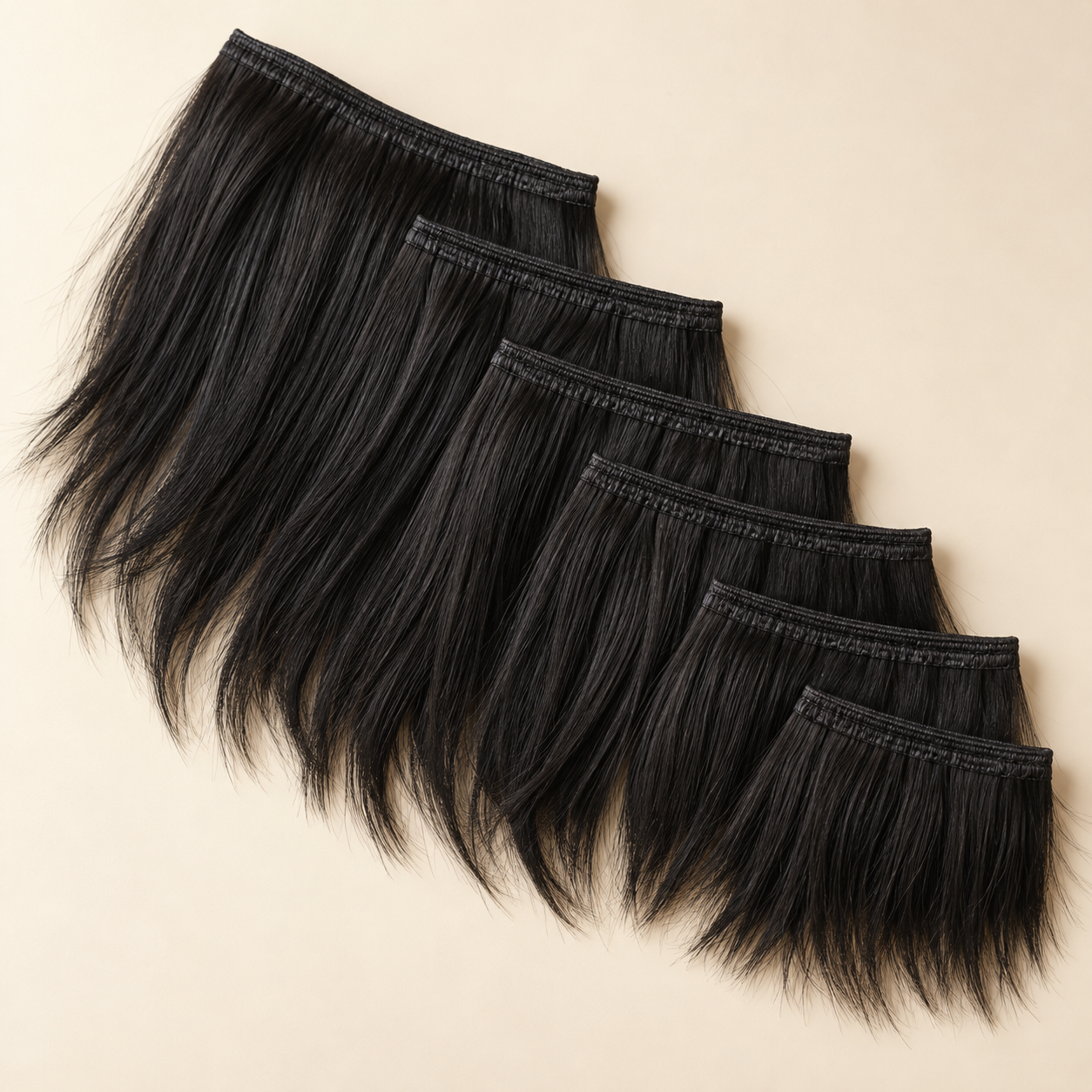 AI VISUAL REFERENCE
Short tracks in several lengths. Illustrative format appearance; verify the exact product construction with its manufacturer. AI-generated reference, not a product photograph or installation demonstration.
A pack may combine short tracks or multiple lengths. Pack count does not establish grams or a full-head quantity.
Short designs still need a top, part and perimeter finishing plan.
Confirm usable grams or piece count, dimensions and exactly what one retail package includes.
What lengths, usable grams and closure pieces are actually included?
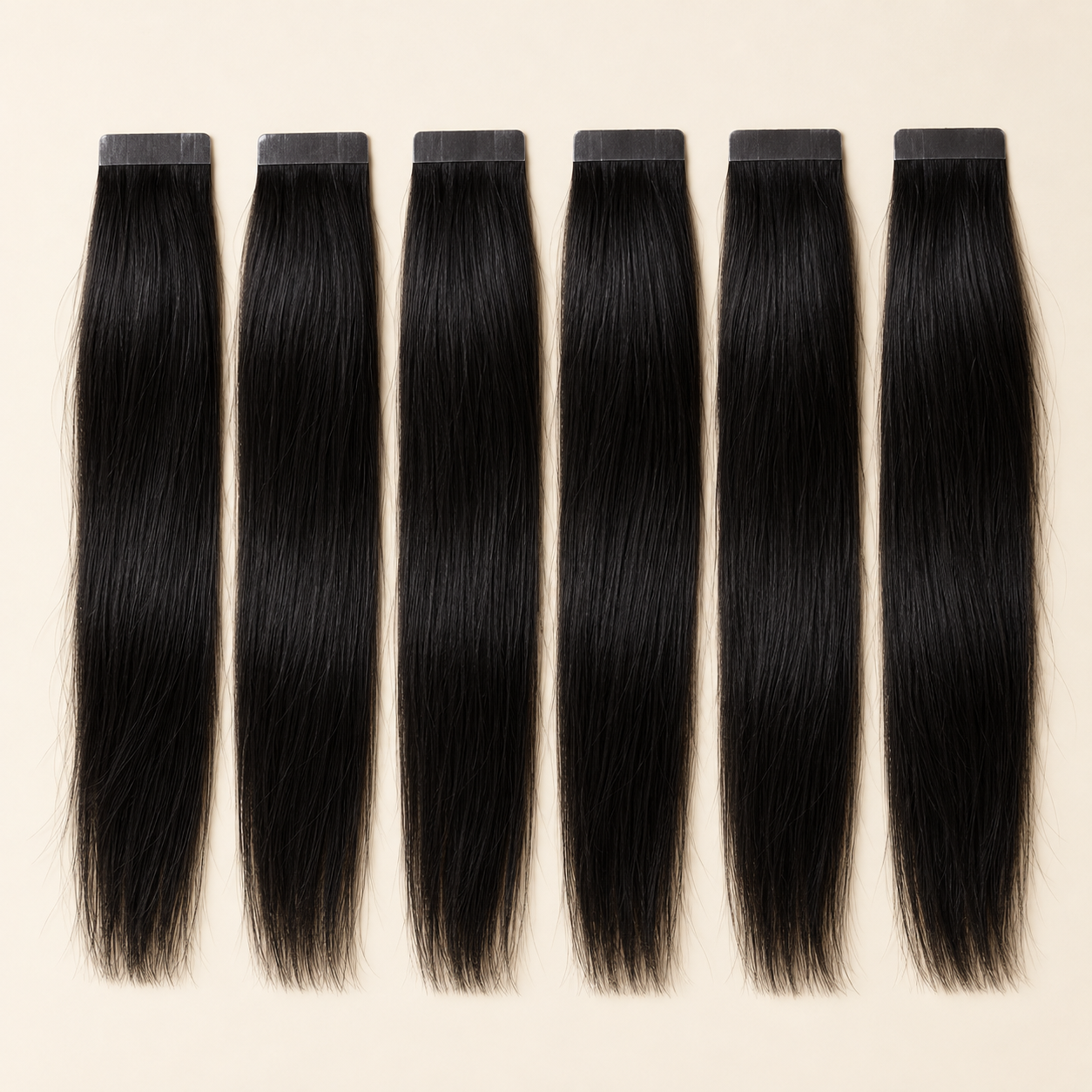 AI VISUAL REFERENCE
Tape-in tabs. Illustrative format appearance; verify the exact product construction with its manufacturer. AI-generated reference, not a product photograph or installation demonstration.
Adhesive attachment pieces worn within natural hair. Product layout and compatible remover matter.
Natural hair generally covers and moves around the attachments.
Compare tabs or paired attachments, width and grams—not a generic bundle count.
Ask for a professional density/coverage assessment, maintenance and removal quote.
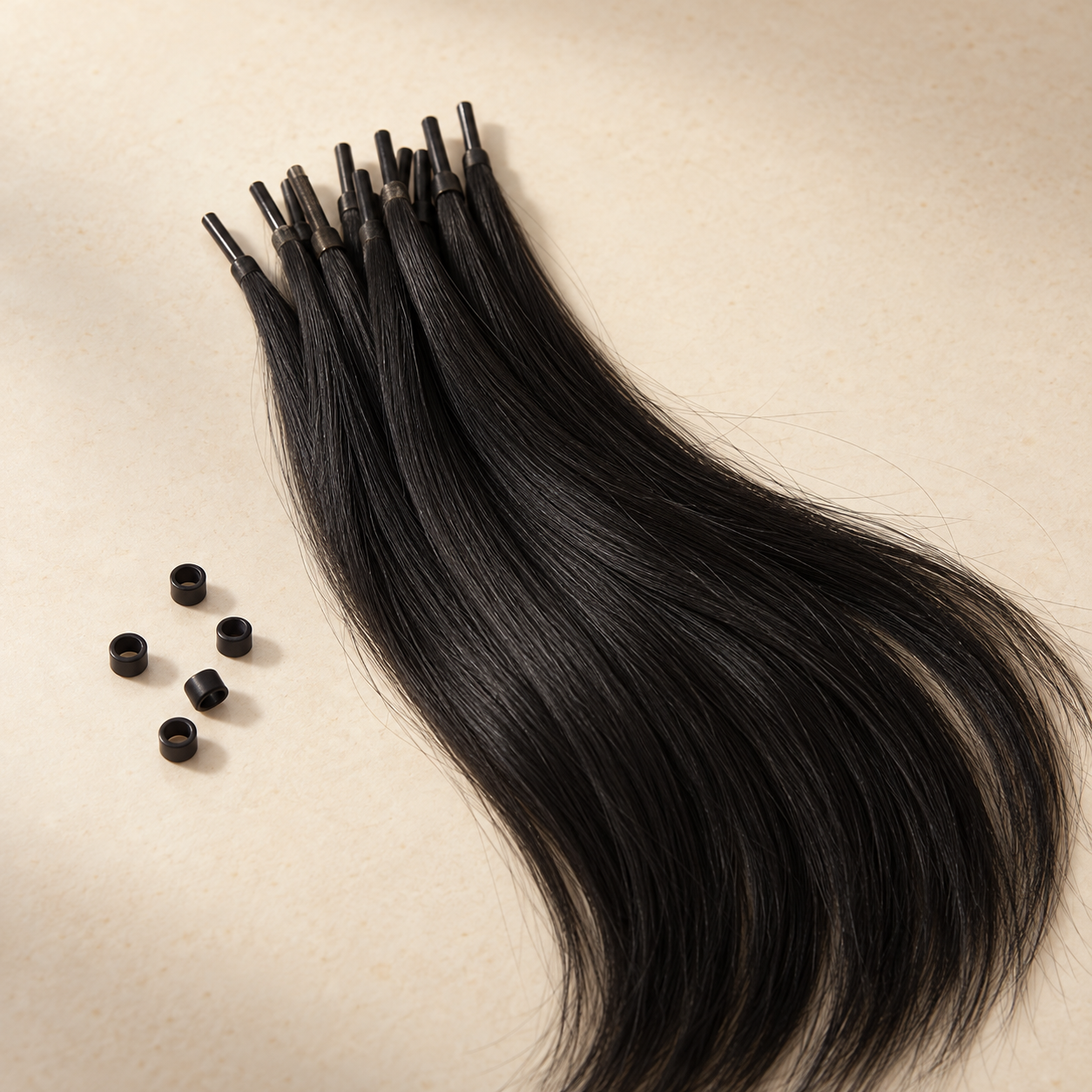 AI VISUAL REFERENCE
Individual I-tip strands. Illustrative format appearance; verify the exact product construction with its manufacturer. AI-generated reference, not a product photograph or installation demonstration.
Individual extensions secured with an appropriate small bead or ring. Tip and bead sizes must be compatible.
Your own hair remains visible between attachment rows.
Compare strand count, grams per strand and compatible tip/ring sizes.
Which tip and ring system, sectioning plan, move-up schedule and removal tools?
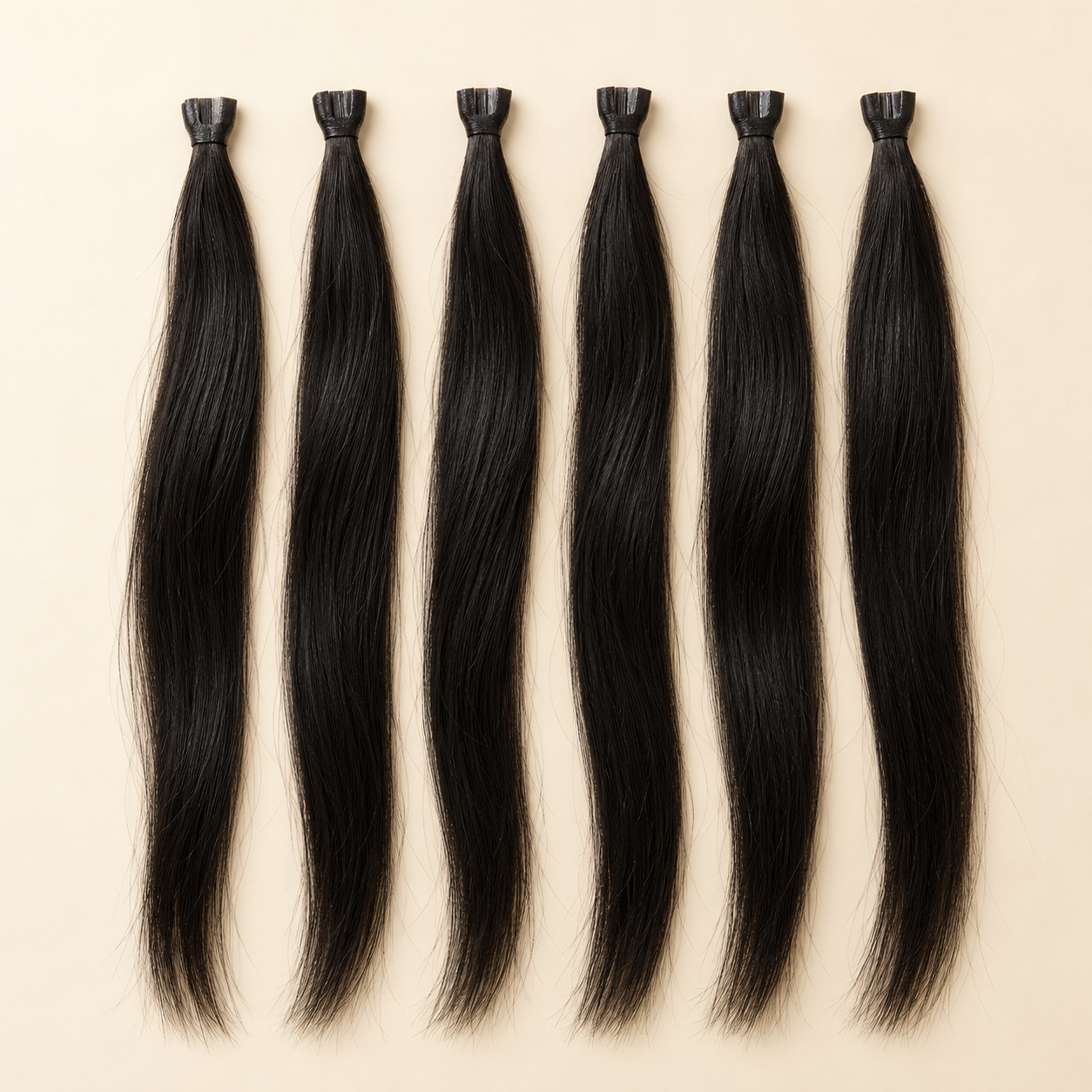 AI VISUAL REFERENCE
Individual bonded-tip strands. Illustrative format appearance; verify the exact product construction with its manufacturer. AI-generated reference, not a product photograph or installation demonstration.
Bonded strand systems. The tip shape and the required bonding process depend on the exact system.
Natural hair blends around the individually placed strands.
Compare strand count, bond system and usable grams; include professional removal.
Book a trained installer; confirm bond ingredients, heat/process and dedicated removal.
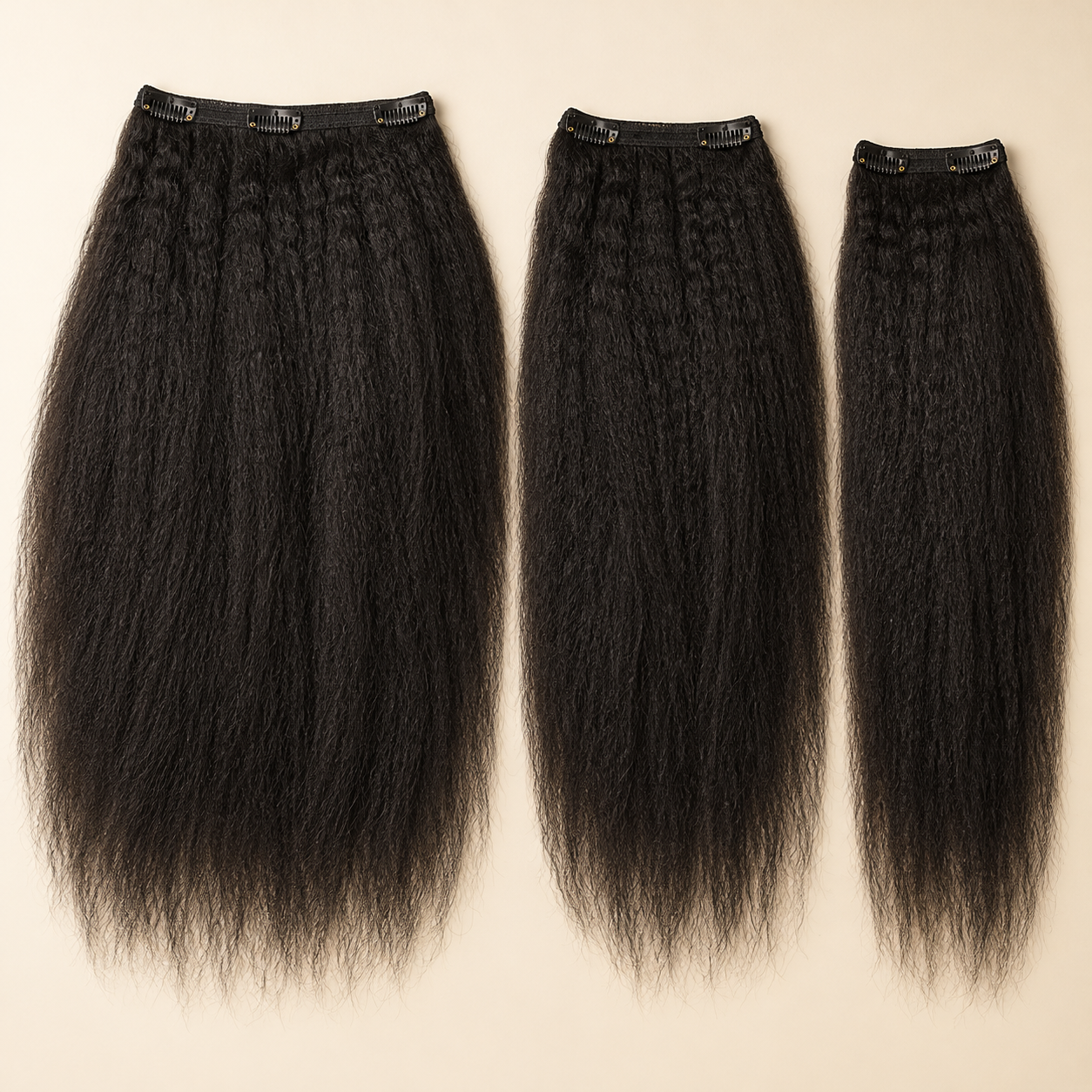 AI VISUAL REFERENCE
Clip-in wefts. Illustrative format appearance; verify the exact product construction with its manufacturer. AI-generated reference, not a product photograph or installation demonstration.
Removable wefts secured with clips. Number of pieces, seam bulk and texture vary.
Natural hair must cover the upper attachment and blend through the lengths.
Compare the piece map, clip positions, grams and the coverage you need.
Can your planned part and density conceal the clips without pulling?
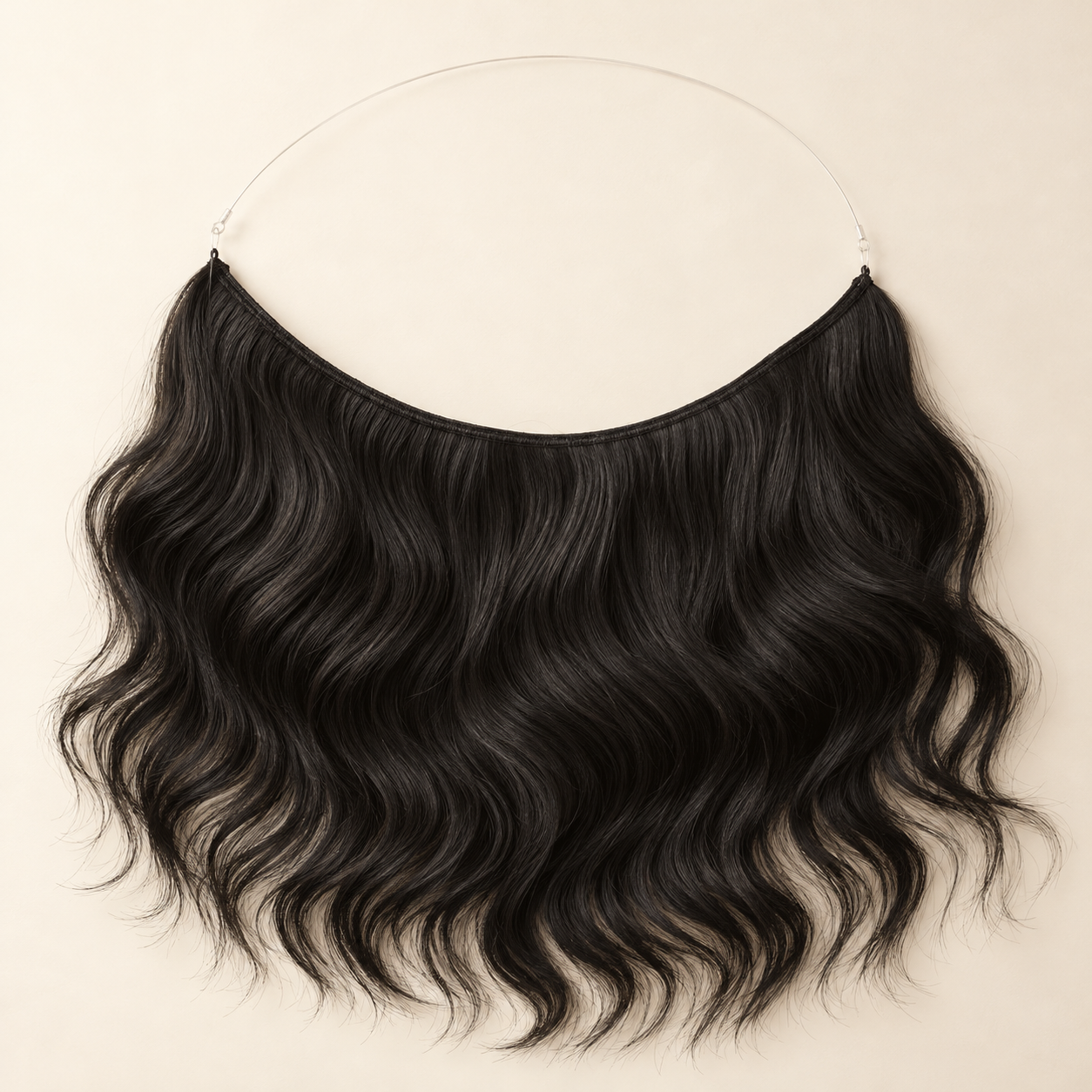 AI VISUAL REFERENCE
Wire-supported halo piece. Illustrative format appearance; verify the exact product construction with its manufacturer. AI-generated reference, not a product photograph or installation demonstration.
A removable extension supported by a fitted wire; some designs also include clips.
Your own top layer covers the wire and joins the extension.
Compare grams, wire fit and any additional clips in this design.
Confirm head fit, coverage, included clips and suitability for your length.
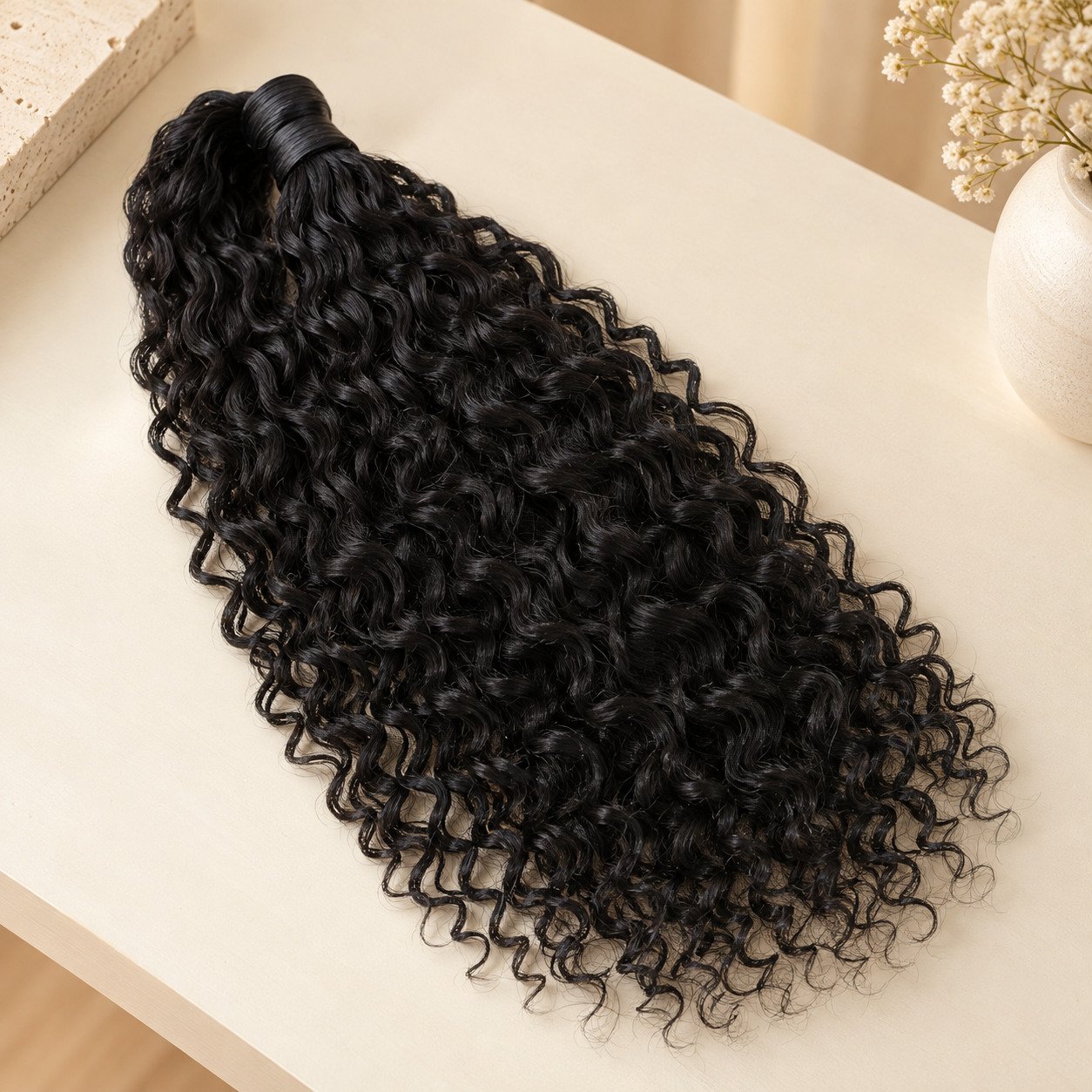 AI VISUAL REFERENCE
Wrap ponytail piece. Illustrative format appearance; verify the exact product construction with its manufacturer. AI-generated reference, not a product photograph or installation demonstration.
Finished ponytail pieces use different bases and fastenings. A loose bundle wrapped into a ponytail is another construction.
Match the visible natural base and the added length, or intentionally contrast them.
Compare piece weight, base dimensions and fastening—not the advertised length alone.
Check base size, combs, fastening, weight and how to remove it comfortably.
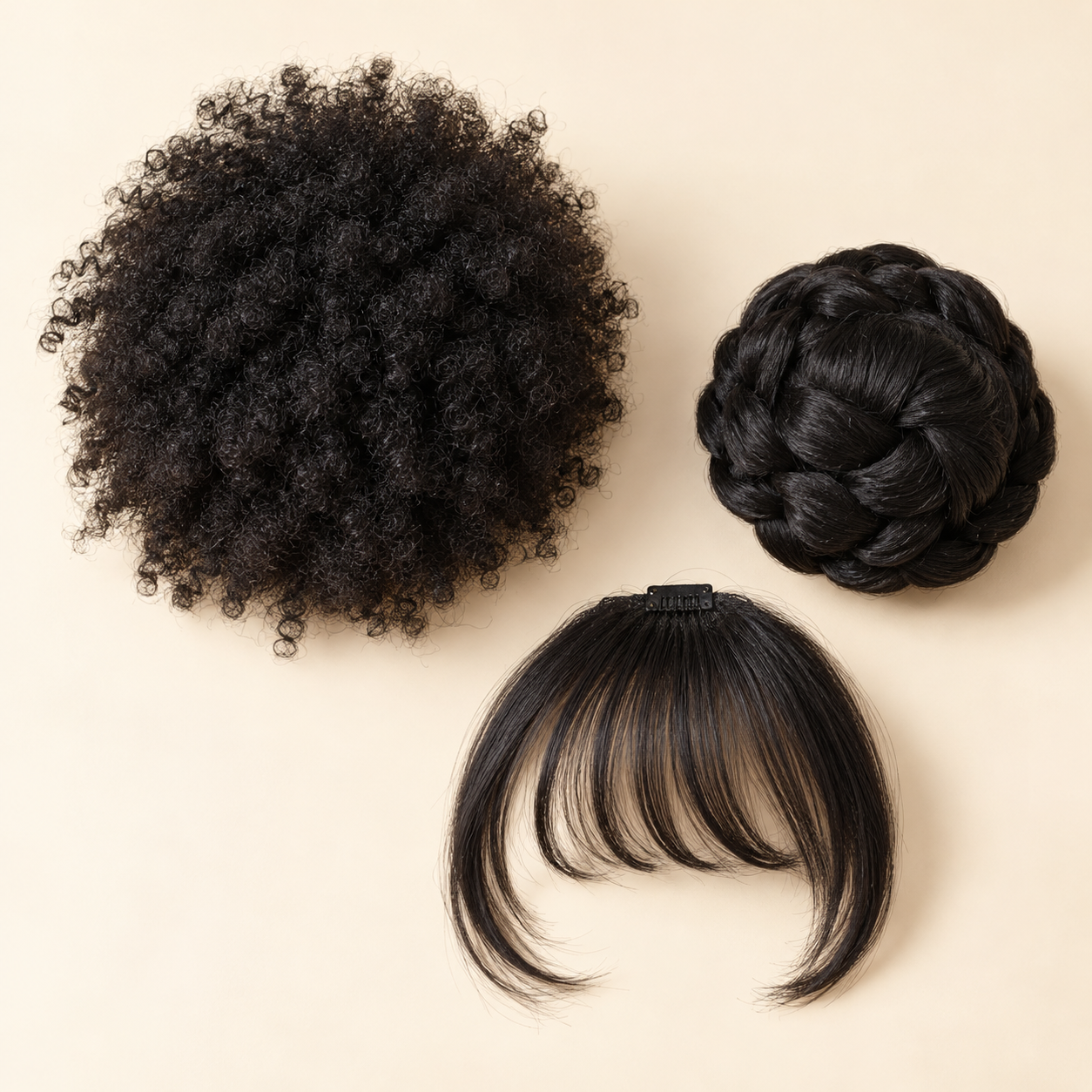 AI VISUAL REFERENCE
Puff, bun & fringe pieces. Three separate removable-piece ideas; confirm the actual fastening and base. AI-generated reference, not a product photograph or installation demonstration.
Localized pieces add a bun, puff, fringe or accent rather than full-head coverage.
Match the exposed boundary, shade and sheen where the piece meets your hair.
Confirm usable grams or piece count, dimensions and exactly what one retail package includes.
Check the base, fastening and coverage needed for the exact piece.
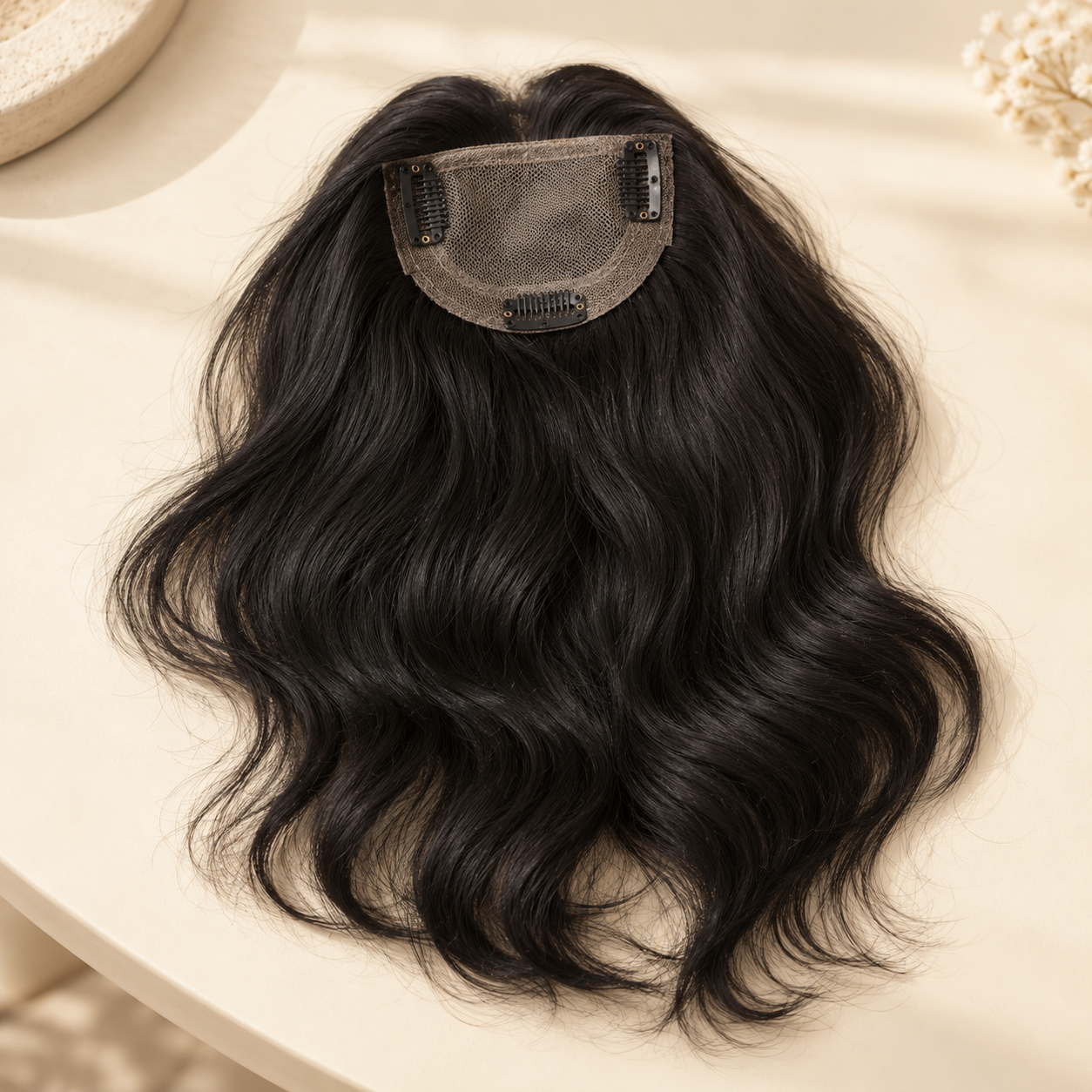 AI VISUAL REFERENCE
Crown coverage piece. Illustrative format appearance; verify the exact product construction with its manufacturer. AI-generated reference, not a product photograph or installation demonstration.
Coverage pieces differ in base area and intended attachment. A crown topper is not a full wig or treatment for hair loss.
Blend around the base perimeter where your own hair remains visible.
Confirm usable grams or piece count, dimensions and exactly what one retail package includes.
Discuss secure attachment on healthy hair; do not place tension on fragile areas.
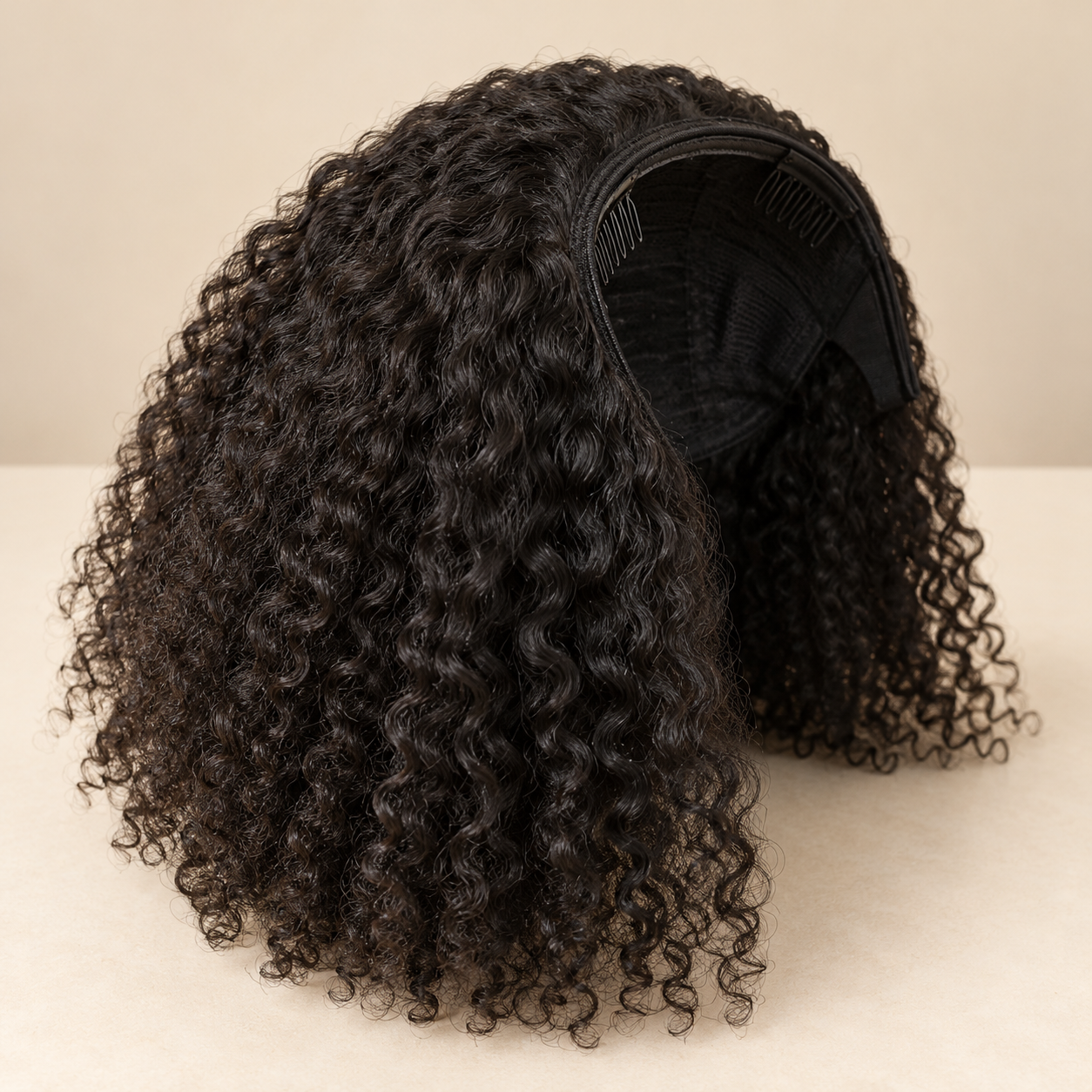 AI VISUAL REFERENCE / 2 VIEWS
Half-wig hairpiece. Illustrative format appearance; verify the exact product construction with its manufacturer. AI-generated reference, not a product photograph or installation demonstration.
Half wigs cover part of the head. Headband designs use a band at the front; coverage depends on the cap.
A half wig may use front leave-out; a headband can cover that transition.
Confirm usable grams or piece count, dimensions and exactly what one retail package includes.
Confirm cap fit, combs, band placement and how much natural hair stays visible.
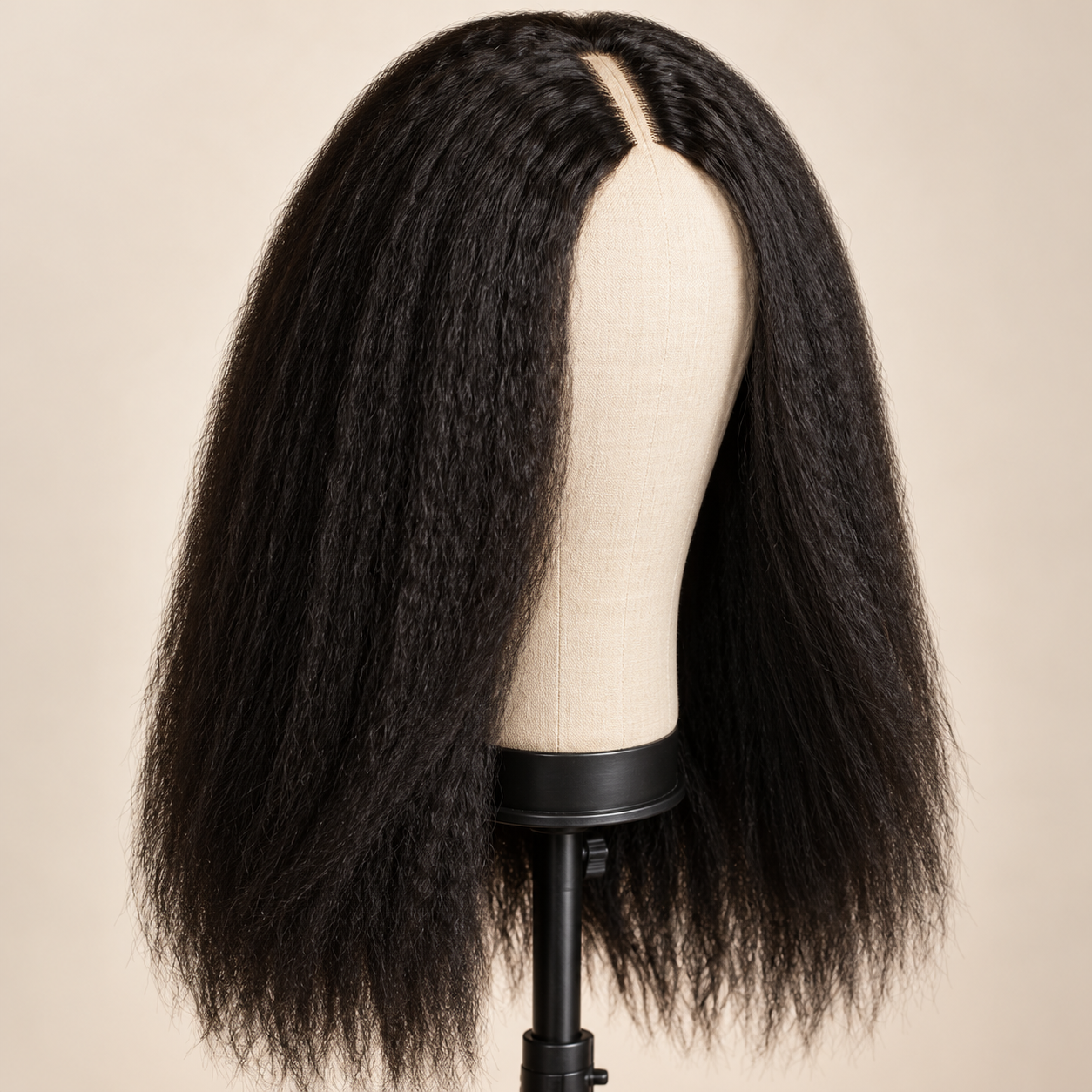 AI VISUAL REFERENCE / 2 VIEWS
V-part opening reference. Illustrative narrow opening; exact shape, clips and coverage vary by cap. AI-generated reference, not a product photograph or installation demonstration.
An opening in the cap allows a natural part or blending area. U and V are cap designs, not material types.
Many U-parts require leave-out; some V-part techniques use little or none. Verify the actual cap and method.
Confirm usable grams or piece count, dimensions and exactly what one retail package includes.
How much of my hair is exposed, and can it cover the opening comfortably?
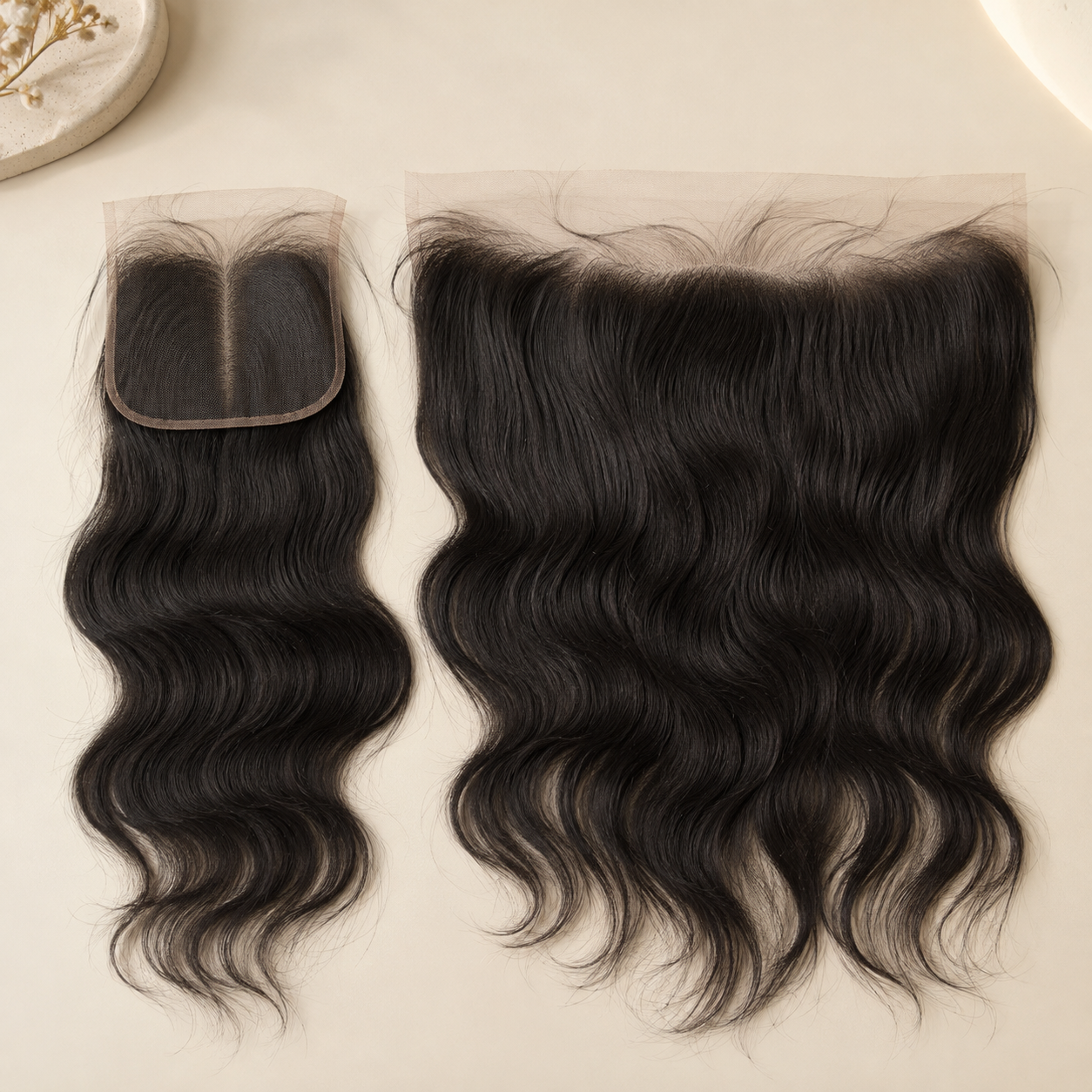 AI VISUAL REFERENCE
Closure & frontal pieces. Separate coverage pieces, shown for appearance rather than calibrated size comparison. AI-generated reference, not a product photograph or installation demonstration.
Separate coverage pieces finish a weave or unit. Part-only closures, wider frontals and perimeter pieces cover different areas.
Can reduce or remove the need for part-area leave-out when suitably installed.
Compare coverage dimensions, parting space and whether the piece is separate or included.
Confirm base dimensions, parting range, lace type, attachment and removal.
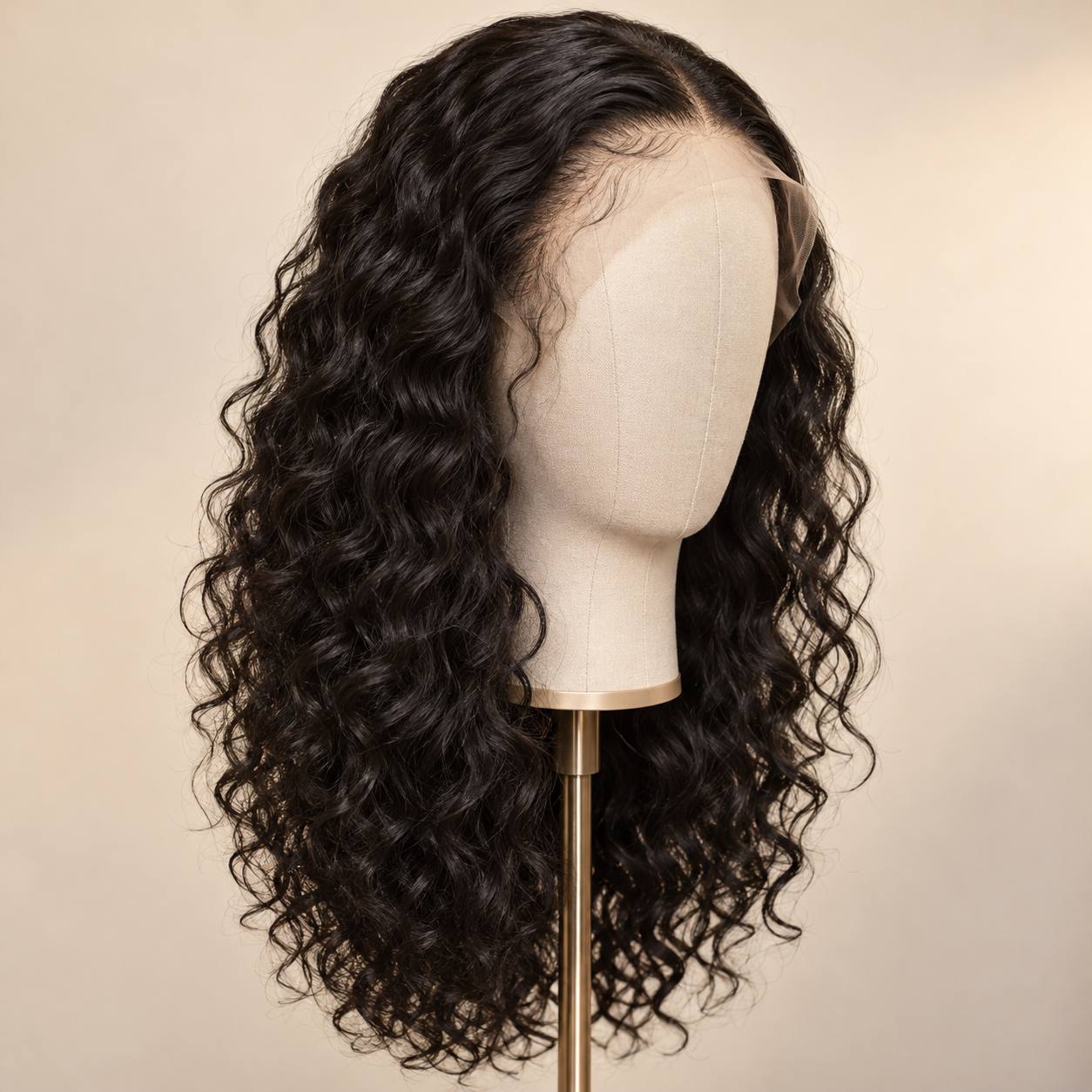 AI VISUAL REFERENCE
Lace-front wig. Illustrative format appearance; verify the exact product construction with its manufacturer. AI-generated reference, not a product photograph or installation demonstration.
Lace placement determines where parting and hairline detail are available. Full lace differs from a lace front with a wefted back.
Usually styled without a strip of natural hair covering the top seam.
Compare cap size, lace coverage and parting area separately from the hair density claim.
Inspect cap construction. HD, transparent, pre-cut and glueless are separate features.
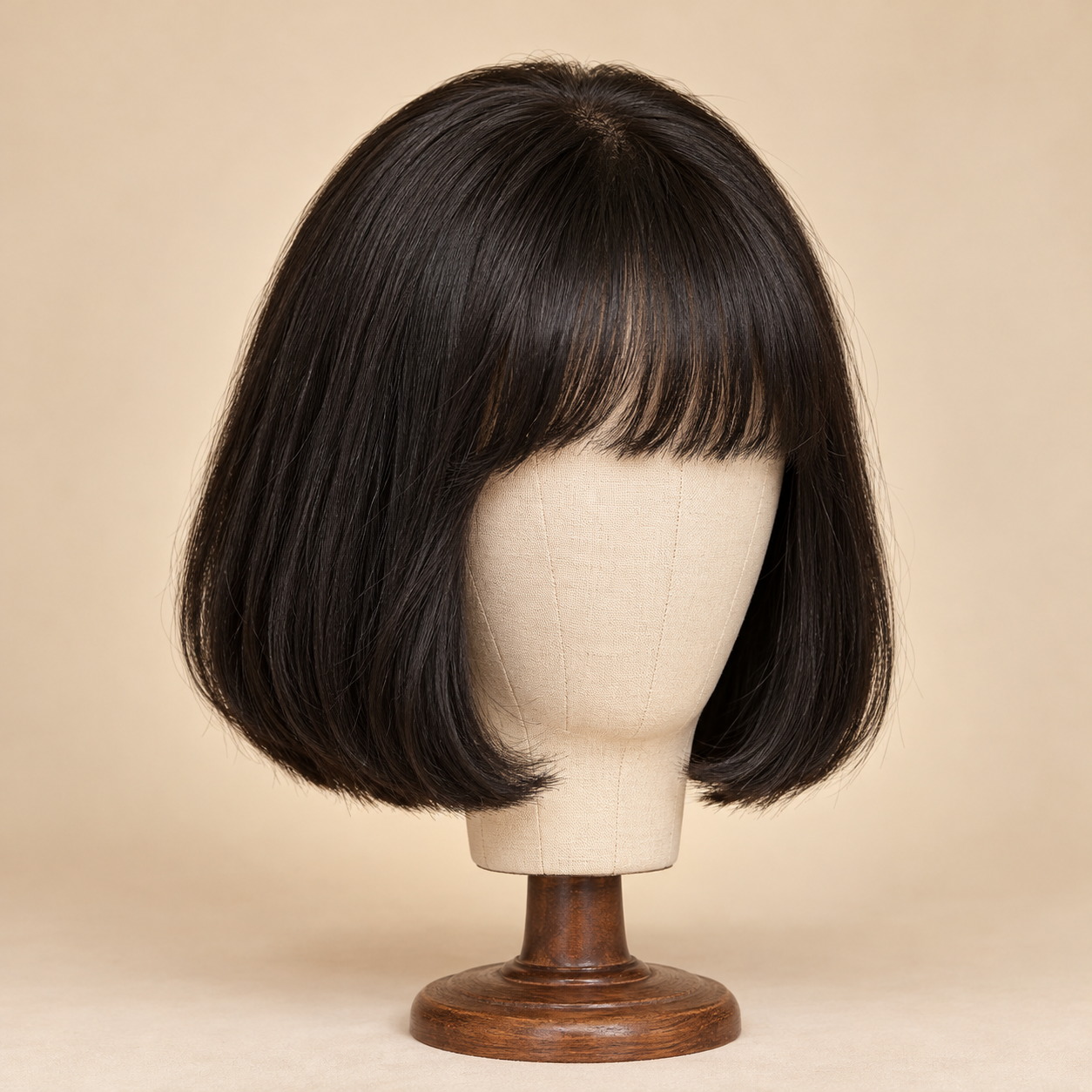 AI VISUAL REFERENCE
Full-cap bob with fringe. Illustrative format appearance; verify the exact product construction with its manufacturer. AI-generated reference, not a product photograph or installation demonstration.
A full unit can have a machine-made cap, hand-tied areas, a monofilament part, or pre-braided lengths.
Usually no loose-hair blend is required; focus on fit, hairline and perimeter.
Confirm usable grams or piece count, dimensions and exactly what one retail package includes.
Which areas are hand tied? Check breathability, weight and fastening rather than relying on a feature name.
COMPARE THE CONSTRUCTION
Read across each row. A material choice such as human hair does not choose the attachment method for you.
| Your question | Machine-weft / hand-tied / slim wefts | I-tip / micro-ring / nano-ring |
|---|---|---|
| What am I buying? | Hair attached along a seam. Seam construction affects cutting, folding and the stylist’s attachment method. | Individual extensions secured with an appropriate small bead or ring. Tip and bead sizes must be compatible. |
| Where is my hair visible? | Traditional leave-out installs need coverage above the top track; closure installs use a different plan. | Your own hair remains visible between attachment rows. |
| Which units do I compare? | Compare usable grams, seam width and whether this exact seam may be cut. | Compare strand count, grams per strand and compatible tip/ring sizes. |
| What do I ask the installer? | May this weft be cut? What foundation, coverage and removal does the stylist propose? | Which tip and ring system, sectioning plan, move-up schedule and removal tools? |
Unit checks and consultation questions are All You planning prompts. They are not installation instructions or quantity prescriptions.
Sam’s Beauty, Sally Beauty and Ebonyline supplied category vocabulary. Manufacturer references clarify selected fibers and methods. These are the major families reviewed, not every SKU or regional format. Availability changes. No universal lifespan or standard pack count is implied. All You’s buying checks are editorial applications.
Sensationnel · Bomb / Spring Twist example ↗
Manufacturer example of spring-twist naming and finish; not every twist product.
Cliphair · nano-ring construction ↗
A supplier example of nano-ring attachment; not interchangeable with all I-tips.
BELLAMI · weft construction ↗
Examples distinguish hand-tied and cuttable hybrid weft construction.
Indique · hair terminology FAQ ↗
Supplier terminology for human hair; sourcing and processing need separate confirmation.
Sam’s Beauty · category map ↗
Retail category names, not proof of material or method suitability.
Sally Beauty US · extensions ↗
Clip-in, tape-in, sew-in and braiding catalog categories.
Sally Beauty UK · human hair extensions ↗
I-tip and micro-ring terminology; UK assortment differs from US.
Ebonyline · wig catalog ↗
Wig construction and finish vocabulary; a filter is not a product specification.
Outre · manufacturer FAQ ↗
Weave, wig and braid explanations; instructions belong to the named product.
Kaneka · fiber families ↗
Manufacturer identification of modacrylic, polyester, PVC and collagen fibers.
Kaneka · futura ↗
One branded polyester family; finished-product instructions still govern.
Denka · TOYOKALON ↗
Manufacturer identifies TOYOKALON as PVC fiber.
Rebundle · materials ↗
Manufacturer describes banana fibers and biopolymers; no universal safety claim is inferred.
Luxy · halo and hairpiece range ↗
Removable extension and coverage formats.
BELLAMI · keratin-tip example ↗
K-tip bonded attachment example, not a DIY installation lesson.
AAD · Black hair care ↗
Care for your own hair; does not establish a synthetic hair temperature.
AAD · traction and attachments ↗
Comfort and traction guidance; no extension is automatically protective.
ALL YOU / FORMAT FIELD GUIDE / CHECKED October 21, 2026
Compare the attachment unit before comparing the bundle price.
Open a guide for its construction, coverage, buying checks and next steps.
5 of 5 format guides in this family
AI VISUAL REFERENCEContinuous weft seam. Illustrative format appearance; verify the exact product construction with its manufacturer. AI-generated reference, not a product photograph or installation demonstration.
Hair attached along a seam. Seam construction affects cutting, folding and the stylist’s attachment method.
Traditional leave-out installs need coverage above the top track; closure installs use a different plan.
Compare usable grams, seam width and whether this exact seam may be cut.
May this weft be cut? What foundation, coverage and removal does the stylist propose?
AI VISUAL REFERENCEShort tracks in several lengths. Illustrative format appearance; verify the exact product construction with its manufacturer. AI-generated reference, not a product photograph or installation demonstration.
A pack may combine short tracks or multiple lengths. Pack count does not establish grams or a full-head quantity.
Short designs still need a top, part and perimeter finishing plan.
Confirm usable grams or piece count, dimensions and exactly what one retail package includes.
What lengths, usable grams and closure pieces are actually included?
AI VISUAL REFERENCETape-in tabs. Illustrative format appearance; verify the exact product construction with its manufacturer. AI-generated reference, not a product photograph or installation demonstration.
Adhesive attachment pieces worn within natural hair. Product layout and compatible remover matter.
Natural hair generally covers and moves around the attachments.
Compare tabs or paired attachments, width and grams—not a generic bundle count.
Ask for a professional density/coverage assessment, maintenance and removal quote.
AI VISUAL REFERENCEIndividual I-tip strands. Illustrative format appearance; verify the exact product construction with its manufacturer. AI-generated reference, not a product photograph or installation demonstration.
Individual extensions secured with an appropriate small bead or ring. Tip and bead sizes must be compatible.
Your own hair remains visible between attachment rows.
Compare strand count, grams per strand and compatible tip/ring sizes.
Which tip and ring system, sectioning plan, move-up schedule and removal tools?
AI VISUAL REFERENCEIndividual bonded-tip strands. Illustrative format appearance; verify the exact product construction with its manufacturer. AI-generated reference, not a product photograph or installation demonstration.
Bonded strand systems. The tip shape and the required bonding process depend on the exact system.
Natural hair blends around the individually placed strands.
Compare strand count, bond system and usable grams; include professional removal.
Book a trained installer; confirm bond ingredients, heat/process and dedicated removal.
COMPARE THE CONSTRUCTION
Read across each row. A material choice such as human hair does not choose the attachment method for you.
| Your question | Machine-weft / hand-tied / slim wefts | I-tip / micro-ring / nano-ring |
|---|---|---|
| What am I buying? | Hair attached along a seam. Seam construction affects cutting, folding and the stylist’s attachment method. | Individual extensions secured with an appropriate small bead or ring. Tip and bead sizes must be compatible. |
| Where is my hair visible? | Traditional leave-out installs need coverage above the top track; closure installs use a different plan. | Your own hair remains visible between attachment rows. |
| Which units do I compare? | Compare usable grams, seam width and whether this exact seam may be cut. | Compare strand count, grams per strand and compatible tip/ring sizes. |
| What do I ask the installer? | May this weft be cut? What foundation, coverage and removal does the stylist propose? | Which tip and ring system, sectioning plan, move-up schedule and removal tools? |
Unit checks and consultation questions are All You planning prompts. They are not installation instructions or quantity prescriptions.
Sam’s Beauty, Sally Beauty and Ebonyline supplied category vocabulary. Manufacturer references clarify selected fibers and methods. These are the major families reviewed, not every SKU or regional format. Availability changes. No universal lifespan or standard pack count is implied. All You’s buying checks are editorial applications.
Sensationnel · Bomb / Spring Twist example ↗
Manufacturer example of spring-twist naming and finish; not every twist product.
Cliphair · nano-ring construction ↗
A supplier example of nano-ring attachment; not interchangeable with all I-tips.
BELLAMI · weft construction ↗
Examples distinguish hand-tied and cuttable hybrid weft construction.
Indique · hair terminology FAQ ↗
Supplier terminology for human hair; sourcing and processing need separate confirmation.
Sam’s Beauty · category map ↗
Retail category names, not proof of material or method suitability.
Sally Beauty US · extensions ↗
Clip-in, tape-in, sew-in and braiding catalog categories.
Sally Beauty UK · human hair extensions ↗
I-tip and micro-ring terminology; UK assortment differs from US.
Ebonyline · wig catalog ↗
Wig construction and finish vocabulary; a filter is not a product specification.
Outre · manufacturer FAQ ↗
Weave, wig and braid explanations; instructions belong to the named product.
Kaneka · fiber families ↗
Manufacturer identification of modacrylic, polyester, PVC and collagen fibers.
Kaneka · futura ↗
One branded polyester family; finished-product instructions still govern.
Denka · TOYOKALON ↗
Manufacturer identifies TOYOKALON as PVC fiber.
Rebundle · materials ↗
Manufacturer describes banana fibers and biopolymers; no universal safety claim is inferred.
Luxy · halo and hairpiece range ↗
Removable extension and coverage formats.
BELLAMI · keratin-tip example ↗
K-tip bonded attachment example, not a DIY installation lesson.
AAD · Black hair care ↗
Care for your own hair; does not establish a synthetic hair temperature.
AAD · traction and attachments ↗
Comfort and traction guidance; no extension is automatically protective.
ALL YOU / FORMAT FIELD GUIDE / CHECKED October 21, 2026
Fit the attachment, then blend the exposed edge.
Open a guide for its construction, coverage, buying checks and next steps.
5 of 5 format guides in this family
AI VISUAL REFERENCEClip-in wefts. Illustrative format appearance; verify the exact product construction with its manufacturer. AI-generated reference, not a product photograph or installation demonstration.
Removable wefts secured with clips. Number of pieces, seam bulk and texture vary.
Natural hair must cover the upper attachment and blend through the lengths.
Compare the piece map, clip positions, grams and the coverage you need.
Can your planned part and density conceal the clips without pulling?
AI VISUAL REFERENCEWire-supported halo piece. Illustrative format appearance; verify the exact product construction with its manufacturer. AI-generated reference, not a product photograph or installation demonstration.
A removable extension supported by a fitted wire; some designs also include clips.
Your own top layer covers the wire and joins the extension.
Compare grams, wire fit and any additional clips in this design.
Confirm head fit, coverage, included clips and suitability for your length.
AI VISUAL REFERENCEWrap ponytail piece. Illustrative format appearance; verify the exact product construction with its manufacturer. AI-generated reference, not a product photograph or installation demonstration.
Finished ponytail pieces use different bases and fastenings. A loose bundle wrapped into a ponytail is another construction.
Match the visible natural base and the added length, or intentionally contrast them.
Compare piece weight, base dimensions and fastening—not the advertised length alone.
Check base size, combs, fastening, weight and how to remove it comfortably.
AI VISUAL REFERENCEPuff, bun & fringe pieces. Three separate removable-piece ideas; confirm the actual fastening and base. AI-generated reference, not a product photograph or installation demonstration.
Localized pieces add a bun, puff, fringe or accent rather than full-head coverage.
Match the exposed boundary, shade and sheen where the piece meets your hair.
Confirm usable grams or piece count, dimensions and exactly what one retail package includes.
Check the base, fastening and coverage needed for the exact piece.
AI VISUAL REFERENCECrown coverage piece. Illustrative format appearance; verify the exact product construction with its manufacturer. AI-generated reference, not a product photograph or installation demonstration.
Coverage pieces differ in base area and intended attachment. A crown topper is not a full wig or treatment for hair loss.
Blend around the base perimeter where your own hair remains visible.
Confirm usable grams or piece count, dimensions and exactly what one retail package includes.
Discuss secure attachment on healthy hair; do not place tension on fragile areas.
COMPARE THE CONSTRUCTION
Read across each row. A material choice such as human hair does not choose the attachment method for you.
| Your question | Clip-ins / clip-in wefts | Drawstring / wrap / clip ponytails |
|---|---|---|
| What am I buying? | Removable wefts secured with clips. Number of pieces, seam bulk and texture vary. | Finished ponytail pieces use different bases and fastenings. A loose bundle wrapped into a ponytail is another construction. |
| Where is my hair visible? | Natural hair must cover the upper attachment and blend through the lengths. | Match the visible natural base and the added length, or intentionally contrast them. |
| Which units do I compare? | Compare the piece map, clip positions, grams and the coverage you need. | Compare piece weight, base dimensions and fastening—not the advertised length alone. |
| What do I ask the installer? | Can your planned part and density conceal the clips without pulling? | Check base size, combs, fastening, weight and how to remove it comfortably. |
Unit checks and consultation questions are All You planning prompts. They are not installation instructions or quantity prescriptions.
Sam’s Beauty, Sally Beauty and Ebonyline supplied category vocabulary. Manufacturer references clarify selected fibers and methods. These are the major families reviewed, not every SKU or regional format. Availability changes. No universal lifespan or standard pack count is implied. All You’s buying checks are editorial applications.
Sensationnel · Bomb / Spring Twist example ↗
Manufacturer example of spring-twist naming and finish; not every twist product.
Cliphair · nano-ring construction ↗
A supplier example of nano-ring attachment; not interchangeable with all I-tips.
BELLAMI · weft construction ↗
Examples distinguish hand-tied and cuttable hybrid weft construction.
Indique · hair terminology FAQ ↗
Supplier terminology for human hair; sourcing and processing need separate confirmation.
Sam’s Beauty · category map ↗
Retail category names, not proof of material or method suitability.
Sally Beauty US · extensions ↗
Clip-in, tape-in, sew-in and braiding catalog categories.
Sally Beauty UK · human hair extensions ↗
I-tip and micro-ring terminology; UK assortment differs from US.
Ebonyline · wig catalog ↗
Wig construction and finish vocabulary; a filter is not a product specification.
Outre · manufacturer FAQ ↗
Weave, wig and braid explanations; instructions belong to the named product.
Kaneka · fiber families ↗
Manufacturer identification of modacrylic, polyester, PVC and collagen fibers.
Kaneka · futura ↗
One branded polyester family; finished-product instructions still govern.
Denka · TOYOKALON ↗
Manufacturer identifies TOYOKALON as PVC fiber.
Rebundle · materials ↗
Manufacturer describes banana fibers and biopolymers; no universal safety claim is inferred.
Luxy · halo and hairpiece range ↗
Removable extension and coverage formats.
BELLAMI · keratin-tip example ↗
K-tip bonded attachment example, not a DIY installation lesson.
AAD · Black hair care ↗
Care for your own hair; does not establish a synthetic hair temperature.
AAD · traction and attachments ↗
Comfort and traction guidance; no extension is automatically protective.
ALL YOU / FORMAT FIELD GUIDE / CHECKED October 21, 2026
Choose the coverage and leave-out plan before the fiber.
Open a guide for its construction, coverage, buying checks and next steps.
5 of 5 format guides in this family
AI VISUAL REFERENCE / 2 VIEWSHalf-wig hairpiece. Illustrative format appearance; verify the exact product construction with its manufacturer. AI-generated reference, not a product photograph or installation demonstration.
Half wigs cover part of the head. Headband designs use a band at the front; coverage depends on the cap.
A half wig may use front leave-out; a headband can cover that transition.
Confirm usable grams or piece count, dimensions and exactly what one retail package includes.
Confirm cap fit, combs, band placement and how much natural hair stays visible.
AI VISUAL REFERENCE / 2 VIEWSV-part opening reference. Illustrative narrow opening; exact shape, clips and coverage vary by cap. AI-generated reference, not a product photograph or installation demonstration.
An opening in the cap allows a natural part or blending area. U and V are cap designs, not material types.
Many U-parts require leave-out; some V-part techniques use little or none. Verify the actual cap and method.
Confirm usable grams or piece count, dimensions and exactly what one retail package includes.
How much of my hair is exposed, and can it cover the opening comfortably?
AI VISUAL REFERENCEClosure & frontal pieces. Separate coverage pieces, shown for appearance rather than calibrated size comparison. AI-generated reference, not a product photograph or installation demonstration.
Separate coverage pieces finish a weave or unit. Part-only closures, wider frontals and perimeter pieces cover different areas.
Can reduce or remove the need for part-area leave-out when suitably installed.
Compare coverage dimensions, parting space and whether the piece is separate or included.
Confirm base dimensions, parting range, lace type, attachment and removal.
AI VISUAL REFERENCELace-front wig. Illustrative format appearance; verify the exact product construction with its manufacturer. AI-generated reference, not a product photograph or installation demonstration.
Lace placement determines where parting and hairline detail are available. Full lace differs from a lace front with a wefted back.
Usually styled without a strip of natural hair covering the top seam.
Compare cap size, lace coverage and parting area separately from the hair density claim.
Inspect cap construction. HD, transparent, pre-cut and glueless are separate features.
AI VISUAL REFERENCEFull-cap bob with fringe. Illustrative format appearance; verify the exact product construction with its manufacturer. AI-generated reference, not a product photograph or installation demonstration.
A full unit can have a machine-made cap, hand-tied areas, a monofilament part, or pre-braided lengths.
Usually no loose-hair blend is required; focus on fit, hairline and perimeter.
Confirm usable grams or piece count, dimensions and exactly what one retail package includes.
Which areas are hand tied? Check breathability, weight and fastening rather than relying on a feature name.
COMPARE THE CONSTRUCTION
Read across each row. A material choice such as human hair does not choose the attachment method for you.
| Your question | U-part / V-part / leave-out wigs | Closures / frontals / 360 pieces |
|---|---|---|
| What am I buying? | An opening in the cap allows a natural part or blending area. U and V are cap designs, not material types. | Separate coverage pieces finish a weave or unit. Part-only closures, wider frontals and perimeter pieces cover different areas. |
| Where is my hair visible? | Many U-parts require leave-out; some V-part techniques use little or none. Verify the actual cap and method. | Can reduce or remove the need for part-area leave-out when suitably installed. |
| Which units do I compare? | Confirm usable grams or piece count, dimensions and exactly what one retail package includes. | Compare coverage dimensions, parting space and whether the piece is separate or included. |
| What do I ask the installer? | How much of my hair is exposed, and can it cover the opening comfortably? | Confirm base dimensions, parting range, lace type, attachment and removal. |
Unit checks and consultation questions are All You planning prompts. They are not installation instructions or quantity prescriptions.
Sam’s Beauty, Sally Beauty and Ebonyline supplied category vocabulary. Manufacturer references clarify selected fibers and methods. These are the major families reviewed, not every SKU or regional format. Availability changes. No universal lifespan or standard pack count is implied. All You’s buying checks are editorial applications.
Sensationnel · Bomb / Spring Twist example ↗
Manufacturer example of spring-twist naming and finish; not every twist product.
Cliphair · nano-ring construction ↗
A supplier example of nano-ring attachment; not interchangeable with all I-tips.
BELLAMI · weft construction ↗
Examples distinguish hand-tied and cuttable hybrid weft construction.
Indique · hair terminology FAQ ↗
Supplier terminology for human hair; sourcing and processing need separate confirmation.
Sam’s Beauty · category map ↗
Retail category names, not proof of material or method suitability.
Sally Beauty US · extensions ↗
Clip-in, tape-in, sew-in and braiding catalog categories.
Sally Beauty UK · human hair extensions ↗
I-tip and micro-ring terminology; UK assortment differs from US.
Ebonyline · wig catalog ↗
Wig construction and finish vocabulary; a filter is not a product specification.
Outre · manufacturer FAQ ↗
Weave, wig and braid explanations; instructions belong to the named product.
Kaneka · fiber families ↗
Manufacturer identification of modacrylic, polyester, PVC and collagen fibers.
Kaneka · futura ↗
One branded polyester family; finished-product instructions still govern.
Denka · TOYOKALON ↗
Manufacturer identifies TOYOKALON as PVC fiber.
Rebundle · materials ↗
Manufacturer describes banana fibers and biopolymers; no universal safety claim is inferred.
Luxy · halo and hairpiece range ↗
Removable extension and coverage formats.
BELLAMI · keratin-tip example ↗
K-tip bonded attachment example, not a DIY installation lesson.
AAD · Black hair care ↗
Care for your own hair; does not establish a synthetic hair temperature.
AAD · traction and attachments ↗
Comfort and traction guidance; no extension is automatically protective.
FIBER GUIDE / WHAT IS THE HAIR MADE OF?
Choose the fiber for how you plan to wear, maintain and restyle the hair. Then choose texture, color and construction.
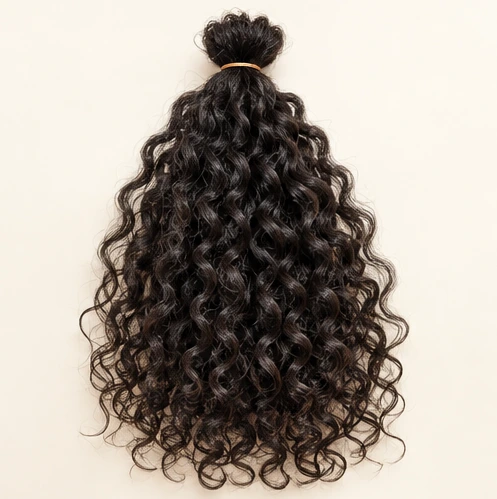
Hair from human donors. “Human-hair blend” is a different label; check the full wording.
Consider for a wig, sew-in or loose boho pieces when restyling and possible reuse matter to you.
Usually a higher upfront cost. Needs gentle detangling, washing and styling; quality and processing vary.
Heat and color services depend on the exact product and its processing. 100% human does not automatically mean virgin, unprocessed or safe to bleach.
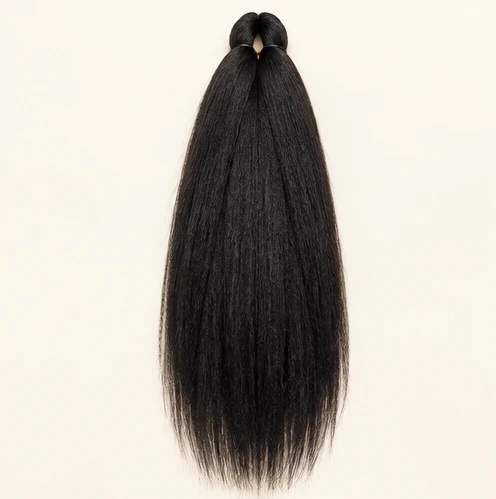
Manufactured fiber, available in straight, textured and pre-curled finishes. A realistic look does not establish the material.
Consider for braid bases, pre-made crochet styles, French curl ends or a ready-styled wig when you want the supplied shape and color.
Often a lower upfront cost. Loose curls may need frequent separation; friction and handling can change the finish.
Use hot tools, steam or hot-water setting only when the exact product instructions allow it. Heat-resistant does not mean unlimited heat. Buy the desired shade rather than assuming regular hair dye will work.
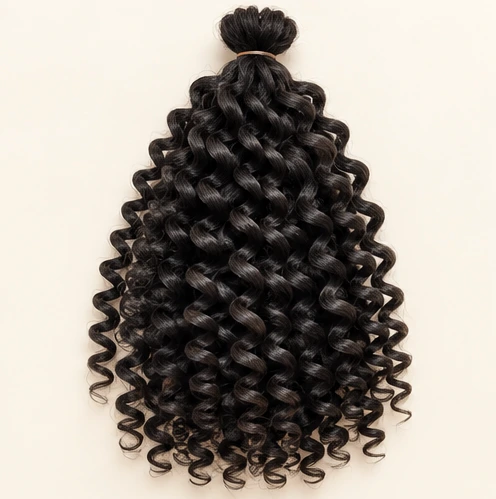
A mixture of materials. Human-hair blends combine human hair with manufactured fiber; other fiber blends may combine synthetic fibers. Check the full material description and any stated proportions.
Consider a compatible blend for a ready-textured quick weave, ponytail, crochet install or boho pieces when its price, finish and care routine suit your plan.
Compare the actual product with both human and synthetic options. Do not assume a fixed blend percentage, wear time or human-hair performance.
Follow that product’s blend instructions. Do not borrow a heat limit from another blend product or assume it can be bleached because “human hair” appears on the front.
Illustrative format photos, not fiber-identification tests or pictures of specific branded products. Human hair, synthetic and blends can look similar. Verify the actual package.
START WITH YOUR STYLE
A synthetic braid base and separate human-hair loose curls can be one option. Synthetic or blend loose curls are alternatives if their upkeep suits you. Confirm bulk versus crochet attachment, curl compatibility and separate quantities with the braider.
Shake-N-Go: QUE Feather Crochet blend example ↗ provides a human-hair blend example. The public description does not state a blend ratio.
Shake-N-Go: Organique Straight 24″ ↗ shows product-specific heat instructions; do not apply them to an entire brand.
Sensationnel: EMPIRE 27PCS ↗ provides a 100% human-hair example and its care guidance. General style suggestions here are shopping guidance, not manufacturer guarantees. Check the current label for the exact item you buy.
ALL YOU / MATERIALS / CHECKED October 21, 2026
Read the exact content claim, then the care instructions. Human, manufactured and mixed fibers can share the same appearance.
A content claim, not a guarantee of donor origin, processing, longevity or colorability. Ask about existing color and texture processing.
Before styling: Use the specific care directions; do not assume it can be bleached.
Remy commonly refers to cuticle alignment. Non-Remy does not itself specify processing. Raw, virgin, single-donor and geographic labels need separate written definitions.
Before styling: Ask what was chemically or mechanically changed and which services are permitted.
Can combine human hair and manufactured fibers. “Blend” alone gives no percentage; “hybrid” can also describe a color mix or construction.
Before styling: Do not infer dye or heat rules from the word human. Request the complete content statement.
Manufactured fibers can be supplied straight or pre-styled. Heat-friendly is a capability claim, not the name of a polymer.
Before styling: Follow the exact package. Hot-water setting and hot-tool permission are different.
A Kaneka branded modacrylic family used for hair attachments. KANEKALON is also an umbrella brand with other fiber families.
Before styling: Confirm the finished item’s setting method; a brand name is not a universal flat-iron limit.
futura is Kaneka’s branded flame-retardant polyester family. Other heat-friendly synthetics need not be futura.
Before styling: A raw-fiber recommendation does not replace the finished wig or extension instructions. Flame-retardant does not mean burn-proof.
Denka identifies TOYOKALON as PVC. Kaneka identifies ADVANTAGE as a separate PVC family. Neither name means human hair.
Before styling: Verify the product’s own heat and handling rules instead of transferring instructions between brands.
Kaneka describes Ultima as a regenerated collagen fiber. A naturally derived feedstock is still not human donor hair.
Before styling: Request exact fiber content and brand-specific washing and restyling instructions.
Rebundle describes its braidbetter material as banana fibers with biopolymers. This is one product system, not a description of all plant-based extensions.
Before styling: Check composition and handling. Plant-based, antimicrobial or hypoallergenic wording cannot guarantee your personal tolerance.
Sam’s Beauty, Sally Beauty and Ebonyline supplied category vocabulary. Manufacturer references clarify selected fibers and methods. These are the major families reviewed, not every SKU or regional format. Availability changes. No universal lifespan or standard pack count is implied. All You’s buying checks are editorial applications.
Sensationnel · Bomb / Spring Twist example ↗
Manufacturer example of spring-twist naming and finish; not every twist product.
Cliphair · nano-ring construction ↗
A supplier example of nano-ring attachment; not interchangeable with all I-tips.
BELLAMI · weft construction ↗
Examples distinguish hand-tied and cuttable hybrid weft construction.
Indique · hair terminology FAQ ↗
Supplier terminology for human hair; sourcing and processing need separate confirmation.
Sam’s Beauty · category map ↗
Retail category names, not proof of material or method suitability.
Sally Beauty US · extensions ↗
Clip-in, tape-in, sew-in and braiding catalog categories.
Sally Beauty UK · human hair extensions ↗
I-tip and micro-ring terminology; UK assortment differs from US.
Ebonyline · wig catalog ↗
Wig construction and finish vocabulary; a filter is not a product specification.
Outre · manufacturer FAQ ↗
Weave, wig and braid explanations; instructions belong to the named product.
Kaneka · fiber families ↗
Manufacturer identification of modacrylic, polyester, PVC and collagen fibers.
Kaneka · futura ↗
One branded polyester family; finished-product instructions still govern.
Denka · TOYOKALON ↗
Manufacturer identifies TOYOKALON as PVC fiber.
Rebundle · materials ↗
Manufacturer describes banana fibers and biopolymers; no universal safety claim is inferred.
Luxy · halo and hairpiece range ↗
Removable extension and coverage formats.
BELLAMI · keratin-tip example ↗
K-tip bonded attachment example, not a DIY installation lesson.
AAD · Black hair care ↗
Care for your own hair; does not establish a synthetic hair temperature.
AAD · traction and attachments ↗
Comfort and traction guidance; no extension is automatically protective.
ALL YOU FIELD NOTES / LOOK CLOSER
Start with what you need the hair to do: keep its supplied style, accept restyling, or offer a balance of cost and maintenance. Then compare the exact product’s care directions. More expensive does not mean the installation is automatically right for your routine.
100% human hair is different wording from human-hair blend. A fiber blend may contain only manufactured fibers. Ask for the full description.
Bulk, wefts, loops and ready-made pieces describe how hair is supplied. They are not material categories.
Heat, hot-water setting and chemical color are separate questions. Permission for one does not imply permission for the others.
A mixed boho installation might use a synthetic braid base and a separate loose-curl product. List each item with its own care instructions and quantity; one care rule may not cover the whole style.
Choose the situation closest to yours for a practical next step.
All You’s checklists, comparisons and worked examples are editorial applications of the sources below. Supplier descriptions apply to the named product or seller; they are not independent proof of performance. Examples with numbers are planning examples unless identified as product specifications.
A manufacturer identifies this specific product as 100% human hair. Material and construction remain separate questions.
A product-specific specification and styling description. Check current packaging; do not generalize instructions to every Organique product.
ALL YOU / FORMAT FIELD GUIDE / CHECKED October 21, 2026
Choose the root attachment and the loose finish separately.
Open a guide for its construction, coverage, buying checks and next steps.
6 of 6 format guides in this family
AI VISUAL REFERENCELoose braiding bulk. Illustrative format appearance; verify the exact product construction with its manufacturer. AI-generated reference, not a product photograph or installation demonstration.
Loose hair without a sewn seam. Regular, jumbo and pre-stretched describe preparation or size, not material.
Usually integrated into a braid or twist rather than used to cover a track.
Confirm usable grams or piece count, dimensions and exactly what one retail package includes.
Is this braid-base hair, loose decorative curl hair, or both? Confirm grams and folded measurement.
AI VISUAL REFERENCEFrench curl lengths & ends. Smooth lengths and curled ends are a finish reference; compare the actual curl product. AI-generated reference, not a product photograph or installation demonstration.
Loose curls can decorate braids; French curl usually describes a smooth length ending in curls. Similar names can hide different construction.
Loose accent curls are added hair, not your natural leave-out.
Confirm usable grams or piece count, dimensions and exactly what one retail package includes.
Where do curls begin, what is the material, and is it bulk or looped?
AI VISUAL REFERENCE / 3 VIEWSSpring-twist finished look. Finished-style inspiration. This portrait does not establish the attachment method or fiber. AI-generated reference, not a product photograph or installation demonstration.
Texture and style families used for twists or wrapping. Compare spring-twist and passion-twist finishes separately from loose Marley-style fiber or a ready-made twist.
Choose the attachment first, then the finished twist shape.
Confirm usable grams or piece count, dimensions and exactly what one retail package includes.
Loose wrapping fiber or finished pieces? Can the supplied curl be separated?
AI VISUAL REFERENCEPrepared crochet braid pieces. Illustrative format appearance; verify the exact product construction with its manufacturer. AI-generated reference, not a product photograph or installation demonstration.
Prepared attachment pieces may be loose curls, braids, twists or faux locs. Folded and looped products are not necessarily installed identically.
A coverage plan may avoid loose natural hair, but perimeter finishing varies.
Confirm usable grams or piece count, dimensions and exactly what one retail package includes.
What does one strand/string contain, and how is this exact piece secured?
AI VISUAL REFERENCEFine curly crochet pieces. An appearance reference only; attachment ends differ between products. AI-generated reference, not a product photograph or installation demonstration.
Retail vocabulary for fine crochet-style curls or attachment pieces; it is not a fiber specification.
Discuss foundation visibility and the intended part before ordering.
Confirm usable grams or piece count, dimensions and exactly what one retail package includes.
Check loop or knot construction, pieces per string, and real installed examples.
AI VISUAL REFERENCESoft faux-loc finished look. Finished-style inspiration; wrapped, crochet and existing-loc joins need different plans. AI-generated reference, not a product photograph or installation demonstration.
Ready-made faux locs, wrapping hair and extensions intended to join existing locs are different purchases.
Focus on the join and foundation rather than a loose-hair blend.
Confirm usable grams or piece count, dimensions and exactly what one retail package includes.
Crochet, wrap or permanent loc extension? Confirm material, weight and removal.
COMPARE THE CONSTRUCTION
Read across each row. A material choice such as human hair does not choose the attachment method for you.
| Your question | Loose bulk / braiding hair | Pre-looped / folded crochet |
|---|---|---|
| What am I buying? | Loose hair without a sewn seam. Regular, jumbo and pre-stretched describe preparation or size, not material. | Prepared attachment pieces may be loose curls, braids, twists or faux locs. Folded and looped products are not necessarily installed identically. |
| Where is my hair visible? | Usually integrated into a braid or twist rather than used to cover a track. | A coverage plan may avoid loose natural hair, but perimeter finishing varies. |
| Which units do I compare? | Confirm usable grams or piece count, dimensions and exactly what one retail package includes. | Confirm usable grams or piece count, dimensions and exactly what one retail package includes. |
| What do I ask the installer? | Is this braid-base hair, loose decorative curl hair, or both? Confirm grams and folded measurement. | What does one strand/string contain, and how is this exact piece secured? |
Unit checks and consultation questions are All You planning prompts. They are not installation instructions or quantity prescriptions.
Sam’s Beauty, Sally Beauty and Ebonyline supplied category vocabulary. Manufacturer references clarify selected fibers and methods. These are the major families reviewed, not every SKU or regional format. Availability changes. No universal lifespan or standard pack count is implied. All You’s buying checks are editorial applications.
Sensationnel · Bomb / Spring Twist example ↗
Manufacturer example of spring-twist naming and finish; not every twist product.
Cliphair · nano-ring construction ↗
A supplier example of nano-ring attachment; not interchangeable with all I-tips.
BELLAMI · weft construction ↗
Examples distinguish hand-tied and cuttable hybrid weft construction.
Indique · hair terminology FAQ ↗
Supplier terminology for human hair; sourcing and processing need separate confirmation.
Sam’s Beauty · category map ↗
Retail category names, not proof of material or method suitability.
Sally Beauty US · extensions ↗
Clip-in, tape-in, sew-in and braiding catalog categories.
Sally Beauty UK · human hair extensions ↗
I-tip and micro-ring terminology; UK assortment differs from US.
Ebonyline · wig catalog ↗
Wig construction and finish vocabulary; a filter is not a product specification.
Outre · manufacturer FAQ ↗
Weave, wig and braid explanations; instructions belong to the named product.
Kaneka · fiber families ↗
Manufacturer identification of modacrylic, polyester, PVC and collagen fibers.
Kaneka · futura ↗
One branded polyester family; finished-product instructions still govern.
Denka · TOYOKALON ↗
Manufacturer identifies TOYOKALON as PVC fiber.
Rebundle · materials ↗
Manufacturer describes banana fibers and biopolymers; no universal safety claim is inferred.
Luxy · halo and hairpiece range ↗
Removable extension and coverage formats.
BELLAMI · keratin-tip example ↗
K-tip bonded attachment example, not a DIY installation lesson.
AAD · Black hair care ↗
Care for your own hair; does not establish a synthetic hair temperature.
AAD · traction and attachments ↗
Comfort and traction guidance; no extension is automatically protective.
Compare loose hanks, curled ends, prepared loops and pre-made styles. These references show appearance and construction; check the material separately.
Loose straight fiber for braiding. Regular and pre-stretched describe preparation; check the material, feathered ends and grams.
Plan quantity for this format ↗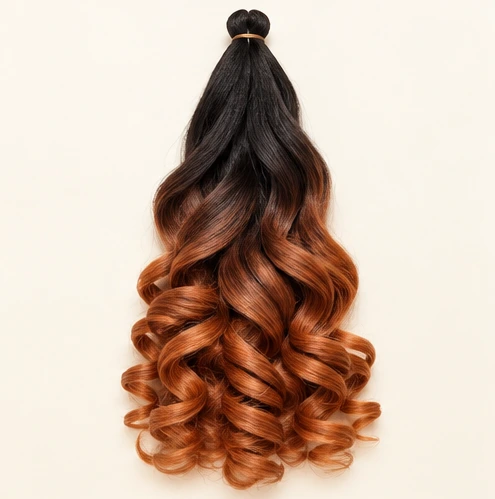
Braiding hair with smooth lengths and pre-curled ends. Choose the actual curl shape and confirm where you will stop braiding to preserve the finish.
Compare French curl lengths + body chart ↗Plan quantity for this format ↗No sewn track. Material still needs to be checked on the package; appearance alone cannot identify human hair.
Plan quantity for this format ↗Loose pre-textured fiber. Verify material, curl handling and compatibility with the intended installation on the exact package.
Plan quantity for this format ↗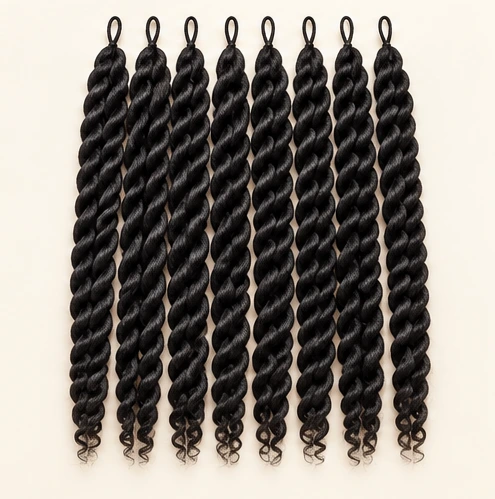
Prepared for crochet attachment. Look for a loop at the top and check whether you are buying loose textured strands or ready-made styles.
Plan quantity for this format ↗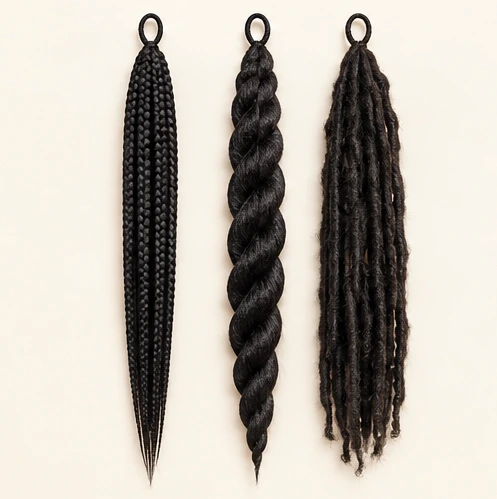
Already formed styles. Compare the braid, twist and faux-loc construction; confirm attachment method, strand count, size and weight.
Plan quantity for this format ↗AI product-format illustrations, not brand-specific product photos. Human hair and synthetic fiber can look similar: verify material, heat limits and care on the package instead of judging from a picture. A texture is a pattern, a fiber is a material, and a loop or weft is construction.
FRENCH CURL / ITS OWN LENGTH REFERENCE
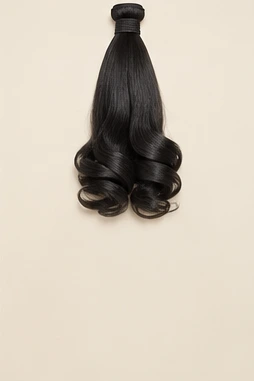
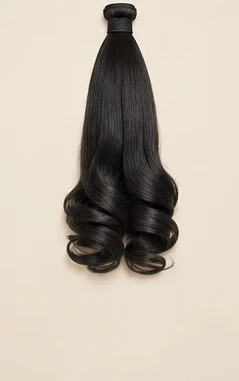
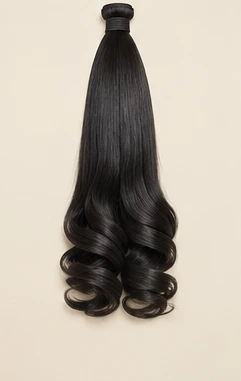
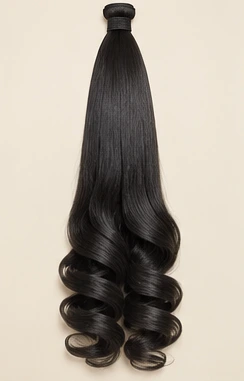
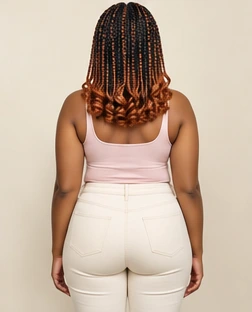
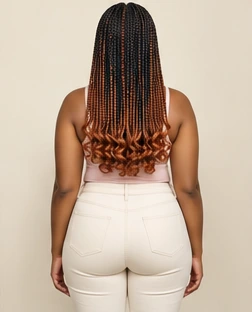
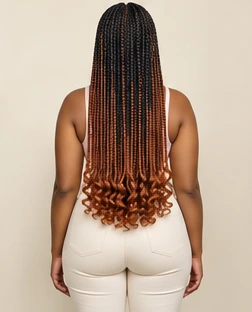
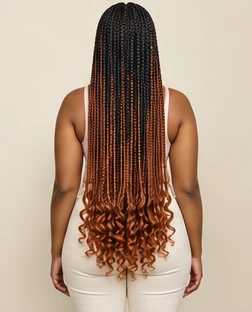
Illustrative options, not measured products. Confirm whether the package length is folded, unfolded, curled or stretched. Braid take-up, your height and the amount left unbraided change the finished drop. The ginger ombré body examples show a style direction, not an exact color match.
ALL YOU FIELD NOTES / LOOK CLOSER
“Braiding hair” is not a single shopping unit. A base braid, loose decorative curl and pre-formed crochet piece can require different products within the same hairstyle. Confirm what is going where before estimating the amount.
Loose fiber is divided for the braid. Pre-stretched describes preparation and tapered ends; check grams, fiber and the measuring method separately.
Pre-curled ends need a plan for where braiding stops. Loose boho pieces can be a separate bulk product; neither name establishes attachment or material.
Count usable pieces and loops, not only the X on the pack. Verify whether you are receiving loose curls, formed braids, twists or faux locs.
A pack labeled 3X is a manufacturer’s package description. It does not mean three retail packs, three times another brand’s weight or enough for every full-head style. The X-Pression example lists construction, material and length separately.
Choose the situation closest to yours for a practical next step.
All You’s checklists, comparisons and worked examples are editorial applications of the sources below. Supplier descriptions apply to the named product or seller; they are not independent proof of performance. Examples with numbers are planning examples unless identified as product specifications.
An example listing separates material, braid type, style and length. Its preparation and setting claims apply to this item.
This particular Bohemian product is described as tight curly and offered for several installations.
ALL YOU / THE COLOR REFERENCE LIBRARY
Browse manufacturer hair swatches by color family. Enlarge a shade, compare up to four, and keep the exact code with your next look.
Compare the actual color placement as well as the shade numbers.
Manufacturer swatch imagery © Sensationnel. References are shown with their original codes and manufacturer groups. Screen color, fiber and product finish can change how a shade appears. Confirm the exact product and a physical sample; a chart listing is not a stock or availability promise.
LOOK AT THE PLACEMENT
Choose up to four swatches. Dark roots, streaks and an all-over mix can look different even when the same shade numbers appear.
THE PACKAGE-READING LESSON
1 and 1B are separate entries. Keep the complete code and manufacturer name with your reference.
This manufacturer groups M1B/350 under Fullmix. Compare it with the solid 350 swatch; a slash is not a recipe or a mixing ratio.
This code appears under Two Tone. Look at the dark section, transition and colored ends rather than matching only “350.”
This entry belongs to Side by Side / Piano. The full code distinguishes it from the full mix and two-tone entries.
Save the brand and exact hair line.
An example shade code, not a length.
Ask how the inches are measured.
Verify the bundle count and weight of one retail pack.
Illustrative package fields, not a real listing or a recommended product combination.
YOUR GINGER AMBER REFERENCE
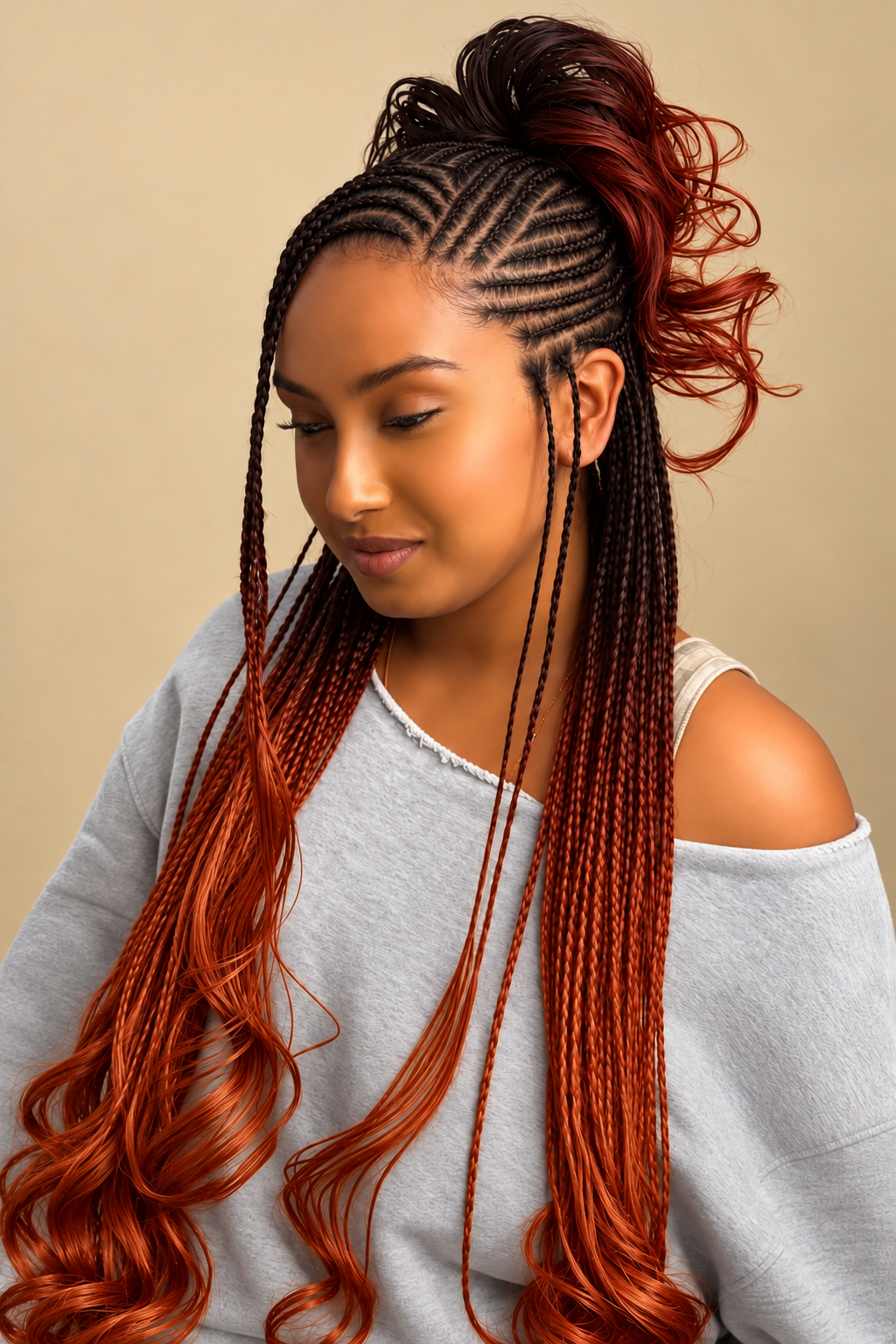
Keep your Ginger Amber Red reference beside the swatches. Confirm the dark roots, transition and loose French curl finish with the stylist. No shade code here is presented as an exact match to that custom color.
Plan a blend with your natural leave-out ↗ALL YOU FIELD NOTES / LOOK CLOSER
A warm copper direction is a useful conversation starter. The purchase decision needs the manufacturer, collection and complete code. The same numbers can look different on another fiber or product finish, and screens change the comparison.
Choose the overall direction in indirect daylight. Compare warmth and depth separately; brighter is not always lighter.
Solid color, distributed highlights and a dark-to-light transition put the same shades in different locations. Inspect the whole swatch.
Copy every letter, number and separator from the selected manufacturer listing. Prefixes are manufacturer-specific; confirm their meaning in that collection.
A solid copper, a black-and-copper mix and a rooted copper ombré may share a color direction while giving very different results near the face. The chart’s T1B/350 and M1B/350 references should be compared visually and by their manufacturer groups; do not replace them with an invented universal formula.
Choose the situation closest to yours for a practical next step.
All You’s checklists, comparisons and worked examples are editorial applications of the sources below. Supplier descriptions apply to the named product or seller; they are not independent proof of performance. Examples with numbers are planning examples unless identified as product specifications.
Original shade identifiers and manufacturer color groupings; not a cross-brand matching standard or stock feed.